Mechanical Seal Suppliers vs Manufacturers: What’s the Difference?
February 6, 2026•5 min read
Why Manufacturer Selection Matters
In industrial procurement, mechanical seals are often treated as standard consumables, but the reality is far more complex. The difference between working with mechanical seal suppliers and mechanical seal manufacturers directly affects equipment reliability, safety, and long-term operating costs. Mechanical seals operate under continuous stress caused by pressure, temperature, shaft movement, vibration, and chemical exposure, making their design and build quality critical.
Suppliers typically focus on availability and distribution, while manufacturers are responsible for engineering and performance accountability. When sealing failures occur, the ability to analyse operating conditions, redesign seal geometry, or change material combinations becomes essential. This level of technical ownership is only possible when dealing with a true mechanical seal manufacturer, making selection a strategic rather than transactional decision.
For industries operating critical equipment, the manufacturer is not just a vendor but a long-term technical partner influencing uptime, compliance, and asset life.
Industry-Wise Mechanical Seal Requirements
Mechanical seal requirements vary significantly across industries due to differences in process conditions and risk levels. Chemical and petrochemical industries require chemical-resistant mechanical seals capable of handling corrosive, toxic, and volatile fluids without leakage. These applications demand precise material selection and robust seal face combinations.
Pharmaceutical and food processing industries place a strong emphasis on hygienic design, cleanability, and contamination prevention. In these sectors, manufacturers must offer seals designed to support clean-in-place operations and regulatory compliance.
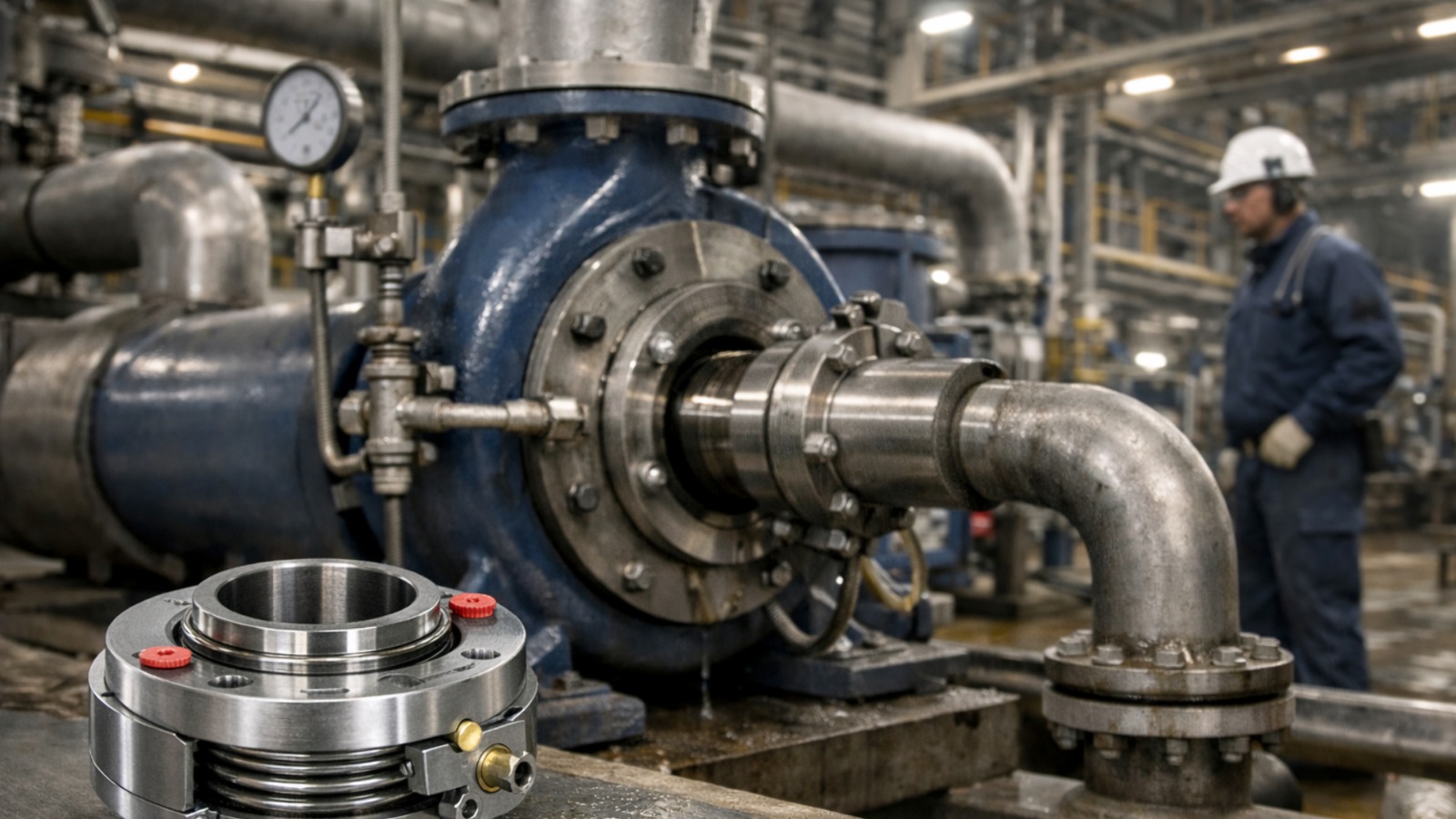
Power plants, refineries, and heavy engineering industries require heavy-duty mechanical seals engineered for high pressures, elevated temperatures, and continuous operation. Water treatment plants, fertilizers, pulp and paper mills, and marine industries often handle slurry or solid-laden fluids, requiring abrasion-resistant sealing solutions. Manufacturers with multi-industry exposure can tailor seal designs to these specific operating environments, whereas suppliers generally offer standardised products.
Technical Parameters Buyers Should Check
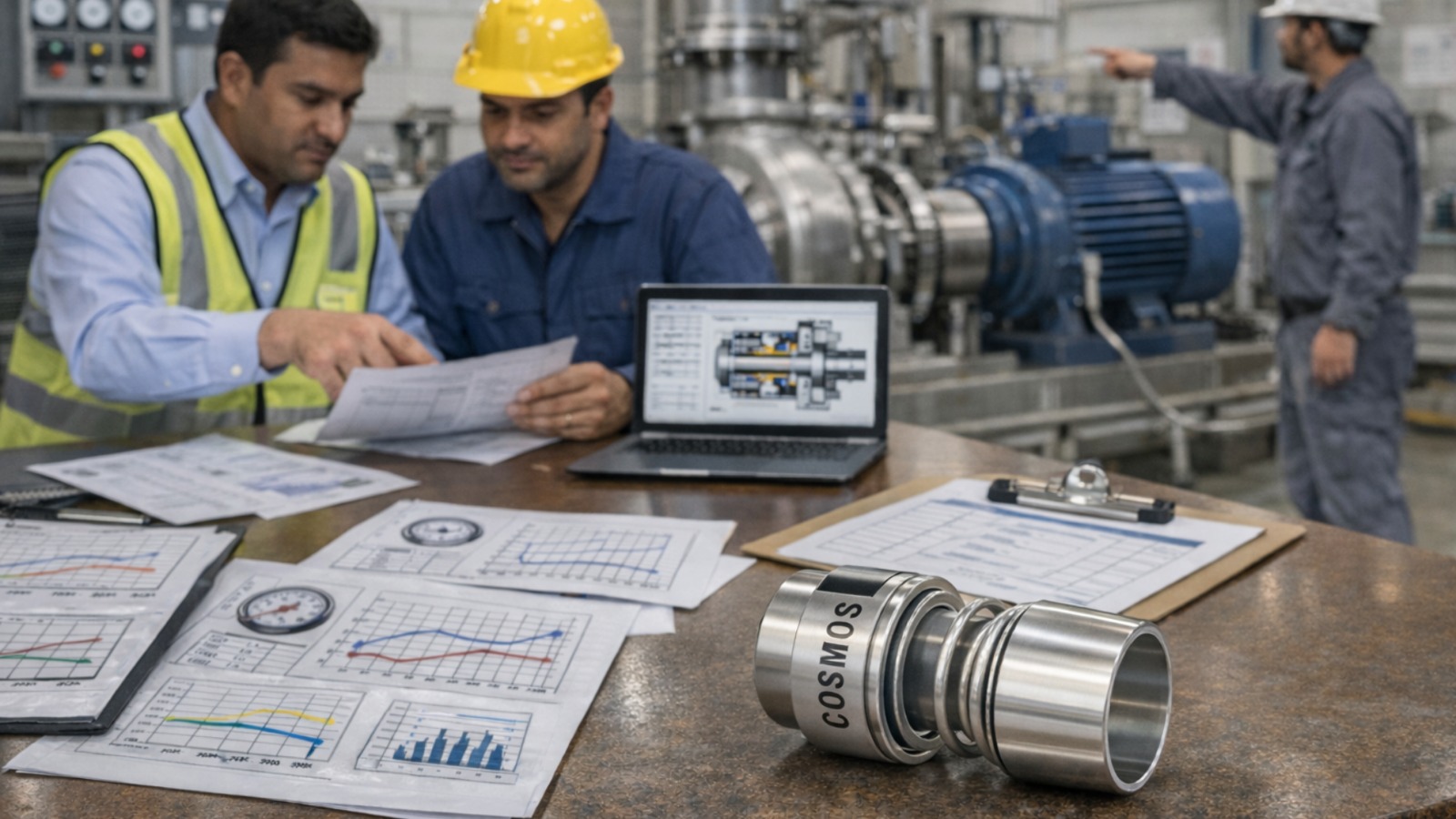
Whether sourcing from a supplier or manufacturer, buyers must evaluate key technical parameters before selecting a mechanical seal. Operating pressure, temperature range, shaft speed, and fluid characteristics directly influence seal performance and longevity. Incorrect evaluation of these parameters is a leading cause of seal failure.
Material selection for seal faces and elastomers is equally important. Compatibility with the pumped media, resistance to heat and wear, and chemical stability determine seal life. Design considerations such as balanced versus unbalanced seals, spring configuration, and axial movement tolerance must also be assessed.
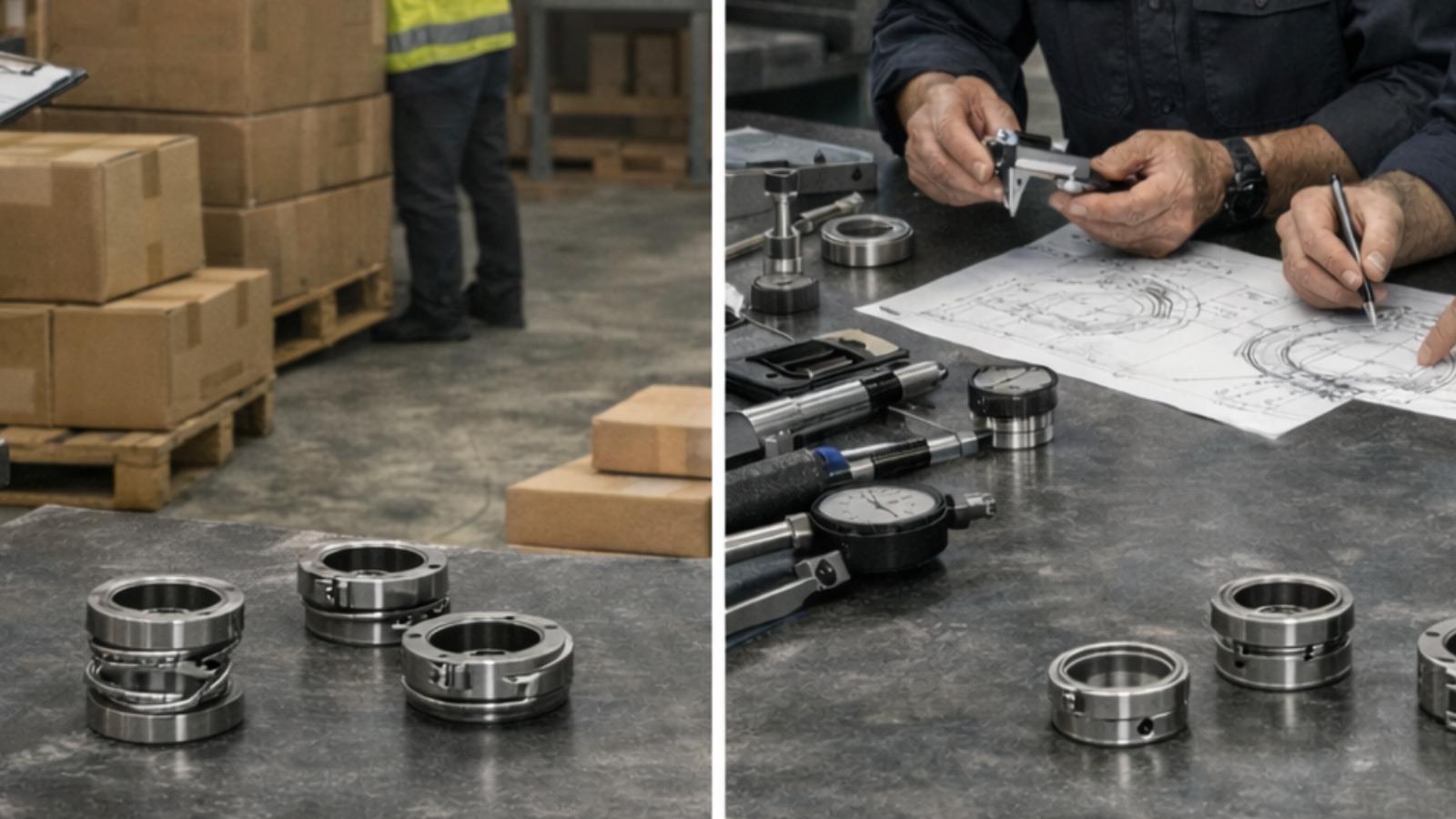
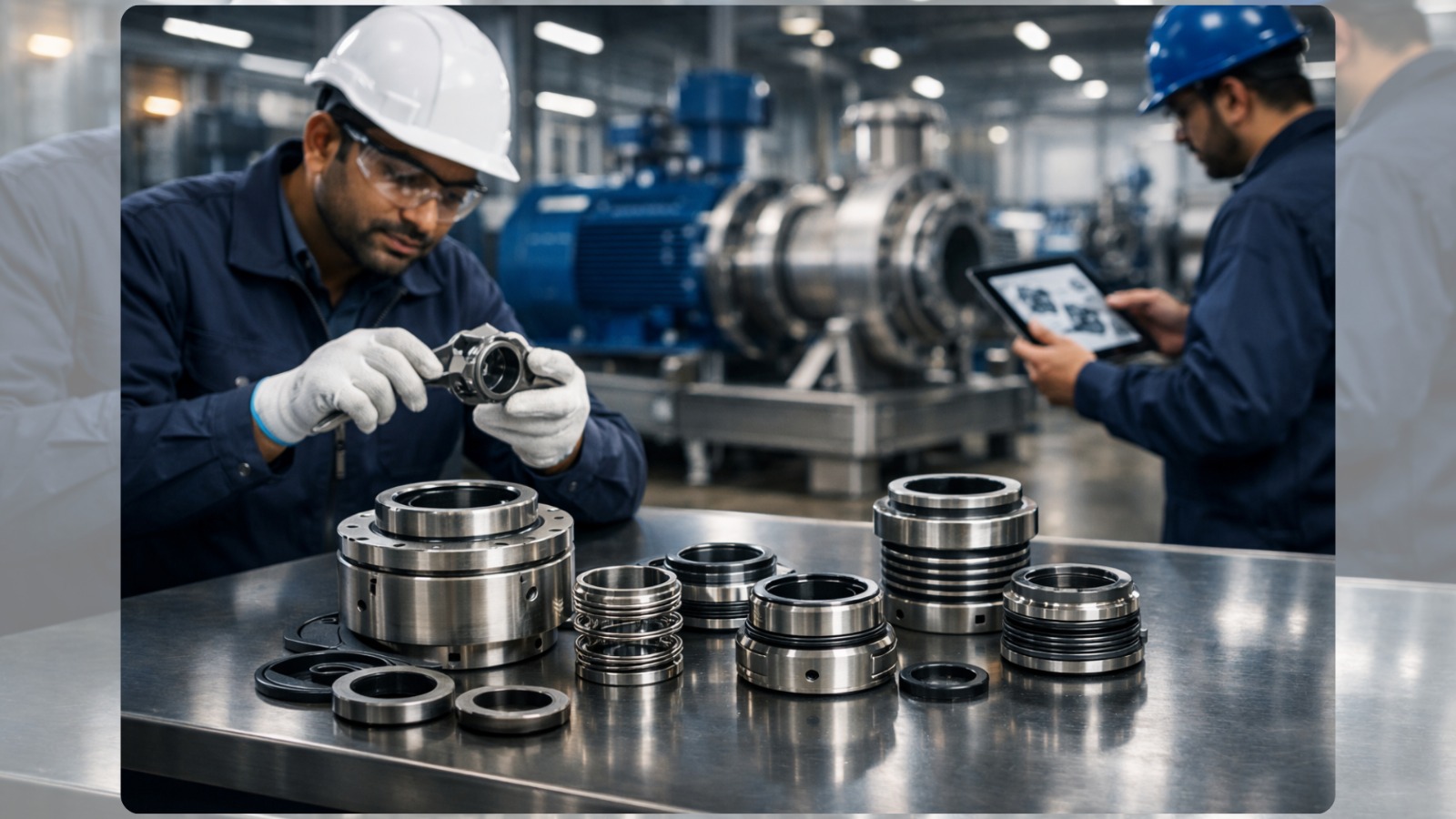
The fundamental difference between mechanical seal manufacturers and trading suppliers lies in control over design and production. Manufacturers design seals in-house, machine critical components, assemble units, and conduct testing under controlled conditions. This allows them to maintain tight tolerances, consistent quality, and repeatable performance.
Trading suppliers typically source seals from third-party manufacturers and resell them with limited technical modification. While this model may work for non-critical or short-term applications, it offers little flexibility when operating conditions change or failures occur.
For industries requiring customisation, repeat supply consistency, and performance accountability, working directly with a manufacturer provides greater reliability and long-term value.
Quality Certifications and Testing Standards
Quality certifications and testing capabilities further differentiate manufacturers from suppliers. Manufacturers following structured quality systems ensure uniformity in materials, machining, and assembly processes. This consistency is essential for maintaining performance across multiple installations.
In-house testing facilities for pressure resistance, temperature endurance, and leakage performance validate seal designs before field deployment. Such testing reduces risk, especially in high-value or safety-critical applications. Suppliers without testing capabilities rely on third-party assurance, which may not reflect actual operating conditions.
After-Sales and Technical Support
After-sales support is a critical yet often underestimated factor in mechanical seal performance. Manufacturers typically provide installation guidance, commissioning assistance, troubleshooting support, and failure analysis. This technical involvement helps ensure seals are correctly installed and operated, reducing early-life failures.
Suppliers may offer limited post-sale support, focusing primarily on replacement rather than optimisation. For industries operating continuous processes or hazardous systems, manufacturer-led technical support plays a vital role in extending seal life and improving reliability.
Common Mistakes Purchase Managers Make
A common mistake purchase managers make is assuming that suppliers and manufacturers provide the same level of value. Selecting seals based solely on availability or price often results in higher lifecycle costs due to repeated failures and maintenance.
Another frequent error is neglecting application-specific consultation. Without proper evaluation of operating parameters and process conditions, even high-quality seals can underperform. Understanding the difference between mechanical seal suppliers and mechanical seal manufacturers helps procurement teams make informed, performance-driven decisions.
Conclusion and Call to Action
Understanding the distinction between mechanical seal suppliers and manufacturers is essential for industries seeking reliable, long-term sealing solutions. Manufacturers provide engineering expertise, customisation capability, quality assurance, and technical accountability that suppliers cannot match.
Cosmos Seals operates as a full-scale manufacturer, offering mechanical seals for pumps, agitator mechanical seals, cartridge mechanical seals, and custom mechanical sealing solutions for demanding industrial applications. With in-house manufacturing and application expertise, Cosmos Seals supports customers across India and international markets including the UAE, Dubai, and the USA.
📞 Call us at +91 9769133001 📧 Email us at info@cosmosseals.com 🌐 Visit www.cosmosseals.com
Frequently Asked Questions
Q1: What is the main difference between mechanical seal suppliers and manufacturers?
A1: Manufacturers design and produce seals in-house, while suppliers typically resell standard products with limited technical control.
Q2: Are mechanical seal suppliers suitable for industrial applications?
A2: Suppliers may suit basic applications, but manufacturers are preferred for critical, customised, or high-performance requirements.
Q3: Do manufacturers provide better technical support than suppliers?
Why Industries Don’t Just Pick Any Mechanical Seal Supplier When industrial buyers search for a list of mechanical seal manufacturers, they are usually trying to avoid operational risk rather than simply comparing prices. Mechanical seals directly affect equipment uptime because pumps, agitators, and compressors cannot function reliably if sealing performance is unstable. Whether it is […]
We are proud to share that Cosmos Seals India Pvt. Ltd. has been featured in Industry Outlook Magazine under the title: “Cosmos Seals India – A Trusted Manufacturer & Exporter Of Premium Quality Seals With Seamless Finish.” This feature highlights the company’s growing presence in the industrial sealing solutions sector and also recognizes the leadership […]
Cost vs Performance Balance For purchase managers, mechanical seals are often evaluated primarily on unit price, especially when procurement targets are cost-driven. However, mechanical seals are not commodity items; they are precision-engineered components whose performance directly influences equipment uptime, safety, and maintenance costs. A lower-priced seal may appear attractive during procurement, but if it is […]
Overview of Pump Sealing Systems Industrial pumps operate in demanding environments where controlling fluid leakage is essential for safety, efficiency, and equipment longevity. Pump sealing systems play a critical role by preventing process fluids from escaping along the rotating shaft while allowing smooth, reliable operation. Among available sealing options, mechanical seals are the most widely […]
Why Seals Fail Prematurely Premature Mechanical seal Failure is one of the most persistent reliability challenges in industrial operations. Mechanical seals are engineered components designed to operate under tightly defined conditions, yet in real-world environments, they are often exposed to variables that exceed their design assumptions. When this happens, even high-quality seals can fail much […]
Hygiene and Sterility Requirements Pharmaceutical manufacturing demands absolute control over contamination, making mechanical seals a critical component in maintaining sterile processing environments. Any leakage, crevice, or material incompatibility can compromise product quality and lead to batch rejection, regulatory scrutiny, or costly production downtime. Mechanical seals used in pharmaceutical applications must be designed with smooth surfaces, […]