What Purchase Managers Should Know Before Ordering Mechanical Seals
February 24, 2026•4 min read
Cost vs Performance Balance
For purchase managers, mechanical seals are often evaluated primarily on unit price, especially when procurement targets are cost-driven. However, mechanical seals are not commodity items; they are precision-engineered components whose performance directly influences equipment uptime, safety, and maintenance costs.
A lower-priced seal may appear attractive during procurement, but if it is not designed for actual operating pressure, temperature, or fluid conditions, it can fail prematurely. This results in repeat purchases, emergency downtime, production losses, and increased maintenance intervention—all of which significantly raise total lifecycle cost.
Purchase managers who evaluate mechanical seal performance, operating suitability, and expected service life alongside price achieve better cost control over time. A performance-led approach ensures fewer failures, predictable maintenance cycles, and improved plant reliability.
Lead Time Planning and Supply Reliability
Lead time is a critical but often underestimated factor in mechanical seal procurement. Unplanned seal failures can bring production to a halt, making seal availability just as important as seal quality.
Reactive purchasing ordering seals only after failure frequently leads to rushed decisions, limited supplier options, and higher costs. Purchase managers should work closely with maintenance and engineering teams to anticipate seal requirements and plan procurement timelines accordingly.
Reliable mechanical seal manufacturers with in-house production capabilities offer better lead time control than trading suppliers. Predictable delivery schedules help reduce emergency procurement and support smoother plant operations.
Documentation and Technical Drawings
Accurate documentation is essential when ordering mechanical seals. Even small dimensional mismatches can result in installation issues, leakage, or early failure. Purchase managers should ensure that every order is supported by correct technical drawings and specifications.
Documentation such as seal dimensions, material details, and installation references helps coordinate between procurement, maintenance, and engineering teams. Lack of proper documentation often leads to incorrect ordering, delays, and costly rework.
Manufacturers who provide consistent and clear documentation simplify procurement decisions and reduce the risk of ordering errors.
Testing and Quality Checks
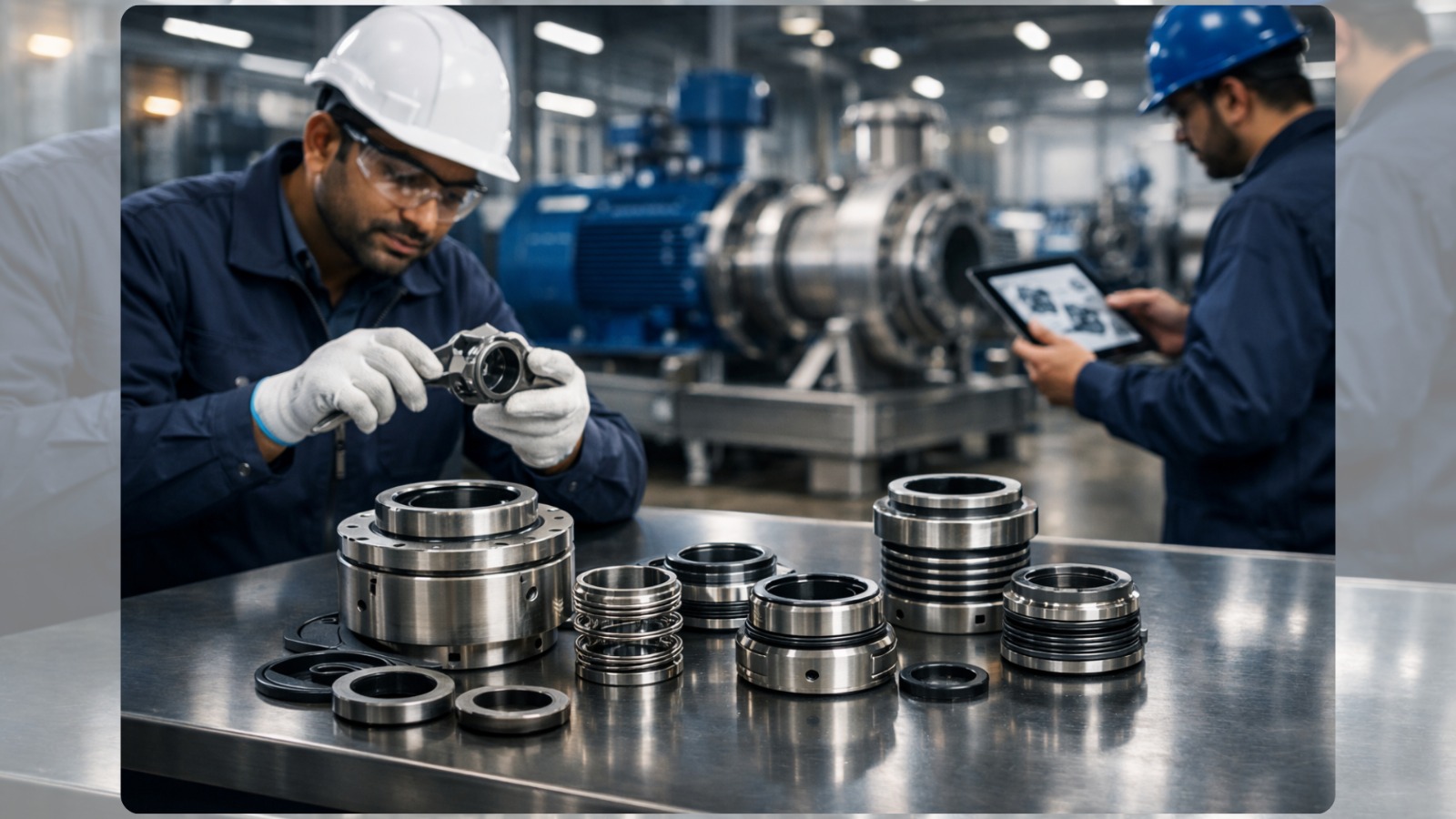
Quality assurance is a key responsibility for purchase managers sourcing industrial mechanical seals. Seals must be manufactured under controlled conditions with proper inspection and testing to ensure consistent performance.
Basic visual inspection is not sufficient for critical applications. Dimensional accuracy, material integrity, and sealing performance must be verified before seals are deployed in service. Seals supplied without adequate quality checks may function initially but fail prematurely under load.
Working with manufacturers who follow structured testing and quality processes reduces failure risk and supports long-term operational reliability.
Importance of Application Data Sharing
One of the most overlooked aspects of mechanical seal procurement is the quality of application data shared during ordering. Without accurate information on operating pressure, temperature, shaft speed, fluid type, and duty cycle, even well-manufactured seals may underperform.
Purchase managers act as a critical link between maintenance teams and suppliers. Ensuring that correct application data is communicated during procurement enables manufacturers to recommend appropriate seal designs and materials.
Incomplete or incorrect data often leads to seal mismatches, repeated failures, and avoidable downtime. Structured data sharing improves first-time-right seal selection and reduces total cost of ownership.
Long-Term Supplier Relationships
Mechanical seal procurement is most effective when approached as a long-term partnership rather than a transactional purchase. Suppliers who understand plant equipment, historical failures, and operating conditions can offer better recommendations over time.
Building long-term relationships with reliable mechanical seal manufacturers enables standardisation across equipment, faster response during breakdowns, and consistent product performance. It also simplifies procurement processes by reducing repeated evaluations and approvals.
For purchase managers, long-term supplier collaboration leads to predictable pricing, better lead times, and improved coordination across departments.
Conclusion and Call to Action
Ordering mechanical seals requires more than comparing prices and availability. Purchase managers must balance cost, performance, lead time, documentation quality, testing standards, and supplier reliability to ensure optimal outcomes.
Cosmos Seals supports purchase managers with mechanical seals for pumps, cartridge mechanical seals, agitator mechanical seals, and custom sealing solutions backed by technical evaluation, documentation support, and reliable manufacturing lead times.
Introduction In industries where reliability, precision, and efficiency are non-negotiable, choosing the right sealing solution can significantly impact equipment performance. Metal Bellow Mechanical Seals are engineered to provide exceptional sealing capabilities in demanding environments where conventional seals may fail. Designed without dynamic elastomers, these seals utilize precision-formed metallic bellows that accommodate thermal expansion, shaft movement, […]
Introduction:- Industrial operations across Kenya rely on dependable equipment to maintain productivity, reduce maintenance costs, and ensure uninterrupted performance. One of the most critical components in rotating equipment is the Mechanical Seal, which prevents fluid leakage and protects pumps, mixers, compressors, and agitators from premature failure. Whether you operate in oil & gas, water treatment, […]
Dry Running: The Silent Destroyer of Mechanical Seals One of the most common reasons behind mechanical seal failure is dry running. Mechanical seals are specifically designed to function with a thin layer of fluid between the seal faces, which acts as lubrication and cooling support during operation. When this lubrication disappears, friction increases rapidly, generating […]
Why Industries Don’t Just Pick Any Mechanical Seal Supplier When industrial buyers search for a list of mechanical seal manufacturers, they are usually trying to avoid operational risk rather than simply comparing prices. Mechanical seals directly affect equipment uptime because pumps, agitators, and compressors cannot function reliably if sealing performance is unstable. Whether it is […]
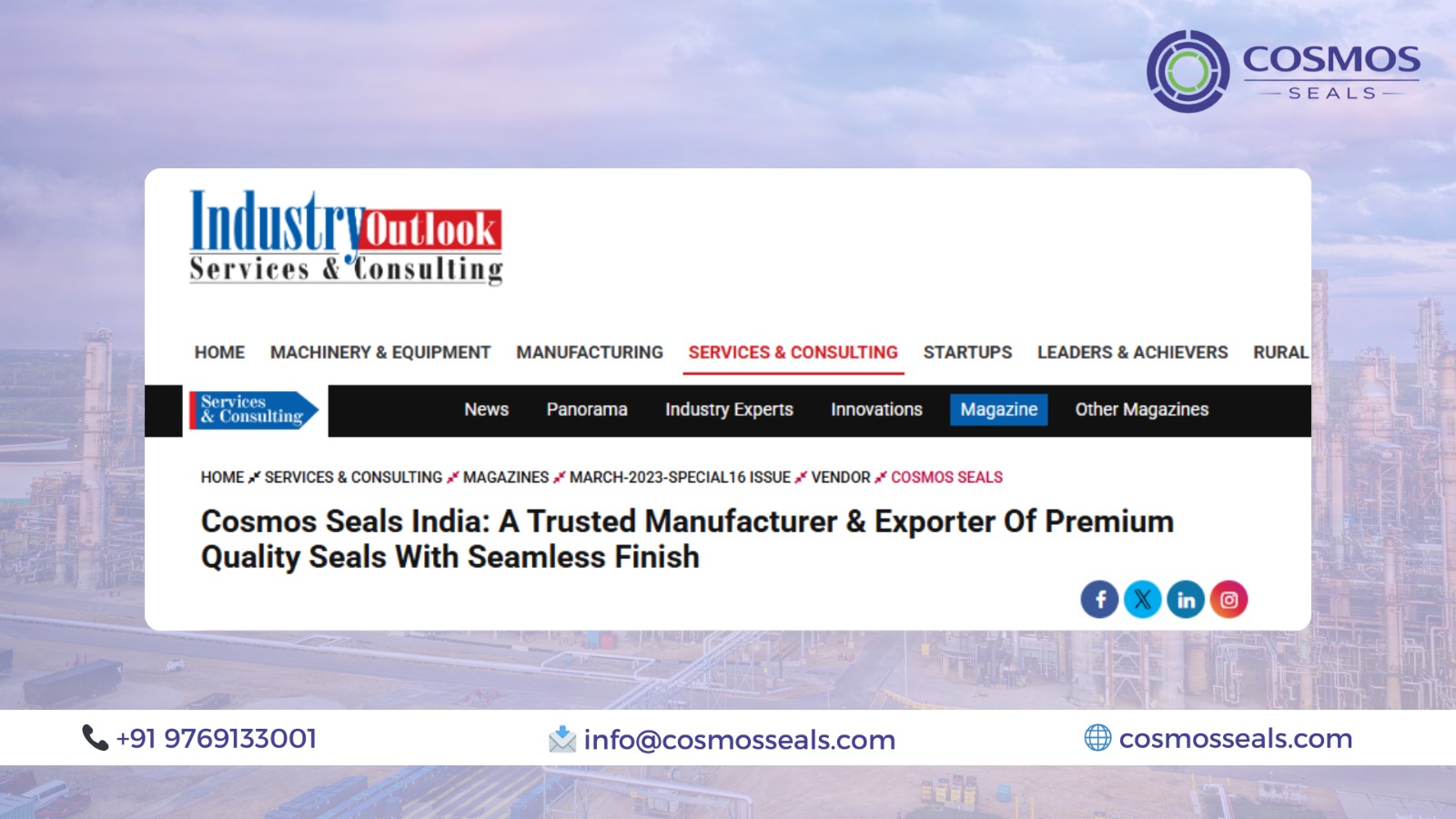
We are proud to share that Cosmos Seals India Pvt. Ltd. has been featured in Industry Outlook Magazine under the title: “Cosmos Seals India – A Trusted Manufacturer & Exporter Of Premium Quality Seals With Seamless Finish.” This feature highlights the company’s growing presence in the industrial sealing solutions sector and also recognizes the leadership […]