Types of Mechanical Seals Used in Industrial Pumps
February 21, 2026•5 min read
Overview of Pump Sealing Systems
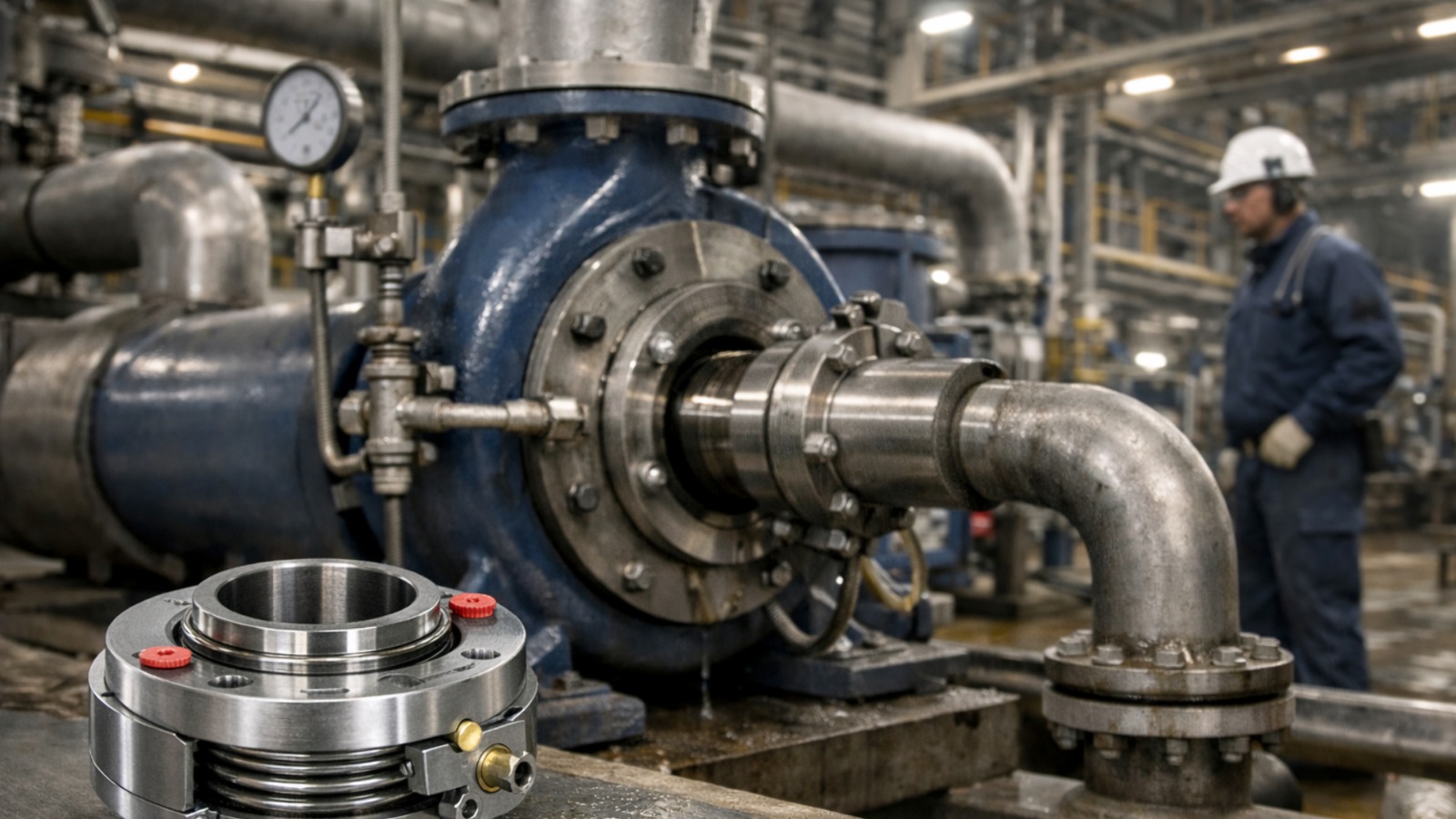
Industrial pumps operate in demanding environments where controlling fluid leakage is essential for safety, efficiency, and equipment longevity. Pump sealing systems play a critical role by preventing process fluids from escaping along the rotating shaft while allowing smooth, reliable operation. Among available sealing options, mechanical seals are the most widely used due to their effectiveness and durability across industrial applications.
A pump sealing system is not limited to the seal alone. It includes the mechanical seal, shaft or sleeve, gland arrangement, and often additional support systems that manage heat, pressure, and lubrication. Selecting the correct type of mechanical seal is essential, as pump designs, operating conditions, and process fluids vary widely across industries.
Understanding the different types of mechanical seals used in industrial pumps helps buyers and engineers choose solutions that minimise leakage, reduce downtime, and extend equipment life.
Component Seals in Industrial Pumps
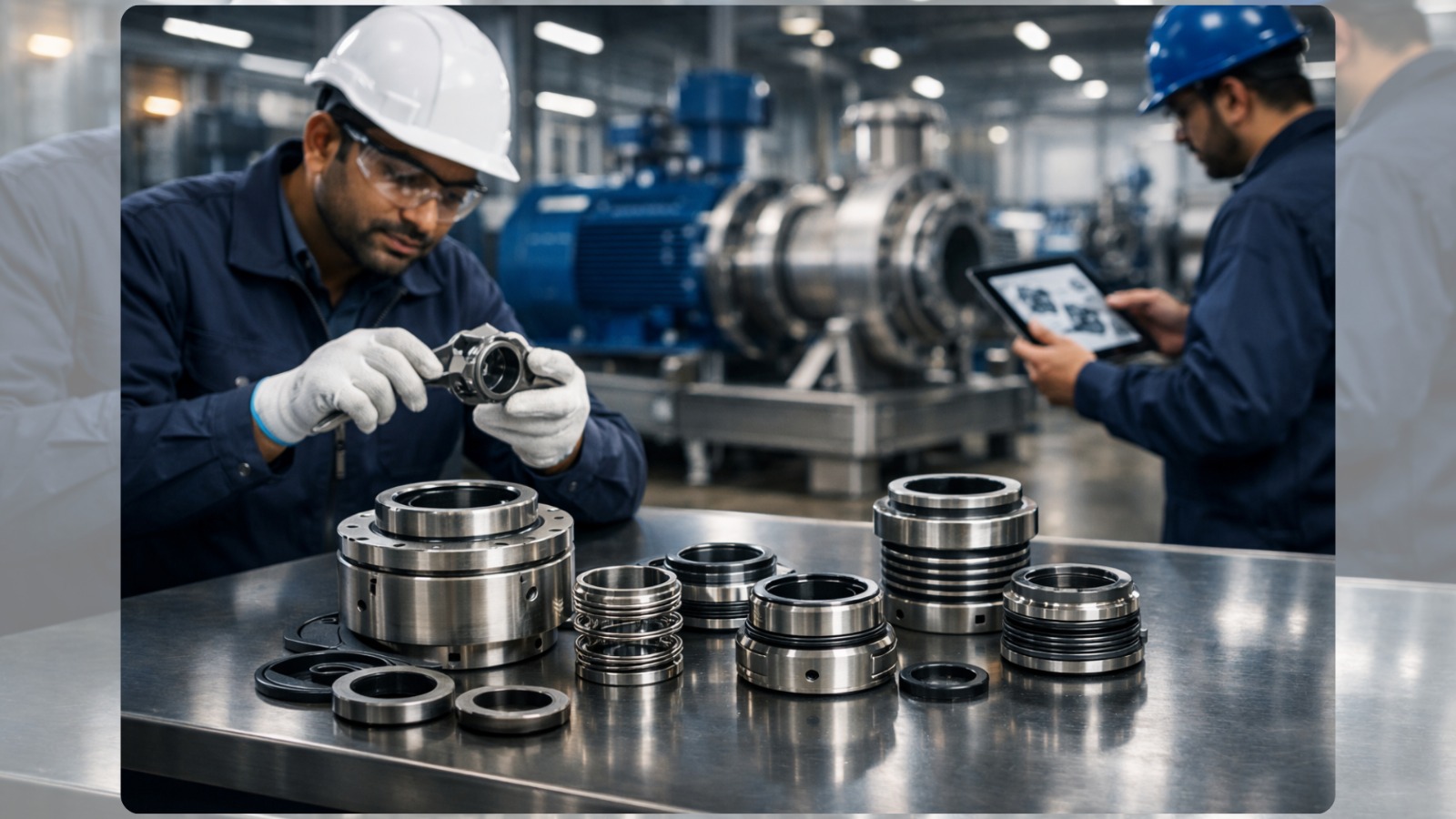
Component mechanical seals are traditional seal designs supplied as individual parts that are assembled directly on the pump shaft during installation. These seals typically consist of a rotating face, stationary face, secondary sealing elements, springs, and hardware components.
Component seals are commonly used in standard pump applications where operating conditions are well understood and installation expertise is available. They offer flexibility in material selection and design configuration, making them suitable for a wide range of fluids and pressures.
However, because component seals require precise installation and setting, they are more susceptible to installation-related errors. For facilities with experienced maintenance teams, component seals remain a practical and cost-effective solution for many industrial pumps.
Cartridge Mechanical Seals
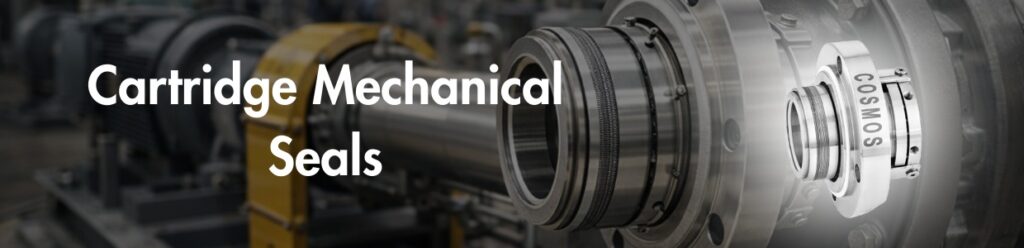
Cartridge mechanical seals are pre-assembled sealing units that include the seal faces, springs, gland plate, and setting components in a single package. These seals are factory-set, eliminating the need for measurement and adjustment during installation.
Cartridge seals are widely preferred in modern industrial pump systems because they significantly reduce installation time and minimise human error. Their design ensures consistent face loading and alignment, leading to improved reliability and longer service life.
Industries operating critical pumps or seeking to reduce maintenance downtime increasingly rely on cartridge mechanical seals for their ease of use, repeatability, and consistent performance across installations.
Agitator and Mixer Seals
Agitators and mixers present unique sealing challenges due to axial movement, vibration, and variable loading conditions. Agitator mechanical seals are specifically designed to accommodate these factors while maintaining reliable sealing performance.
Unlike standard pump seals, agitator seals often allow controlled axial movement of the shaft and are built to withstand higher levels of mechanical stress. These seals are commonly used in chemical reactors, pharmaceutical vessels, and process tanks where mixing is essential.
Selecting the correct agitator seal design is critical, as improper sealing can lead to leakage, contamination, or equipment damage. Application-specific evaluation is essential when choosing seals for agitators and mixers.
Seal Support Systems
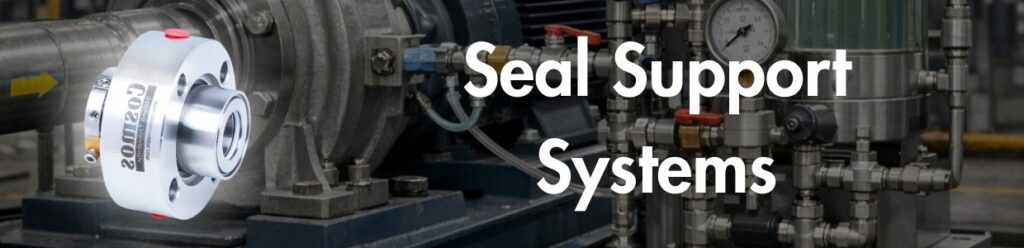
Seal performance is heavily influenced by the surrounding seal support systems. These systems manage heat removal, pressure control, and lubrication at the seal faces, ensuring stable operating conditions.
Common support arrangements include flush systems that introduce clean fluid to the seal chamber, cooling systems that manage temperature, and barrier or buffer fluid systems used in dual seal configurations. Properly designed support systems significantly reduce wear, overheating, and leakage.
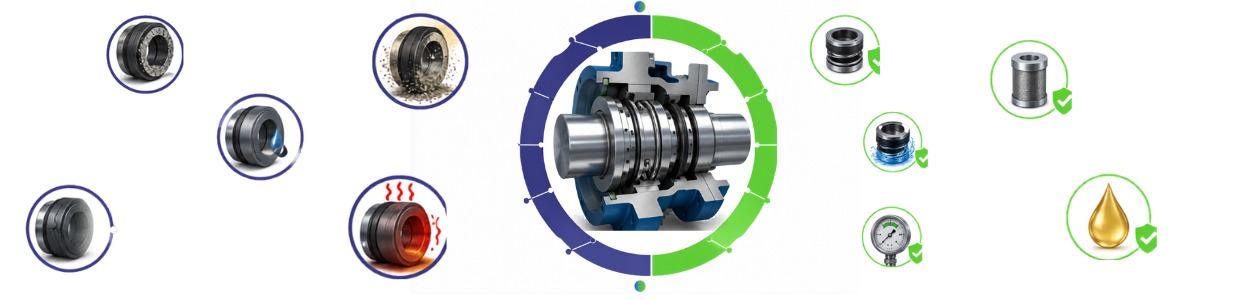
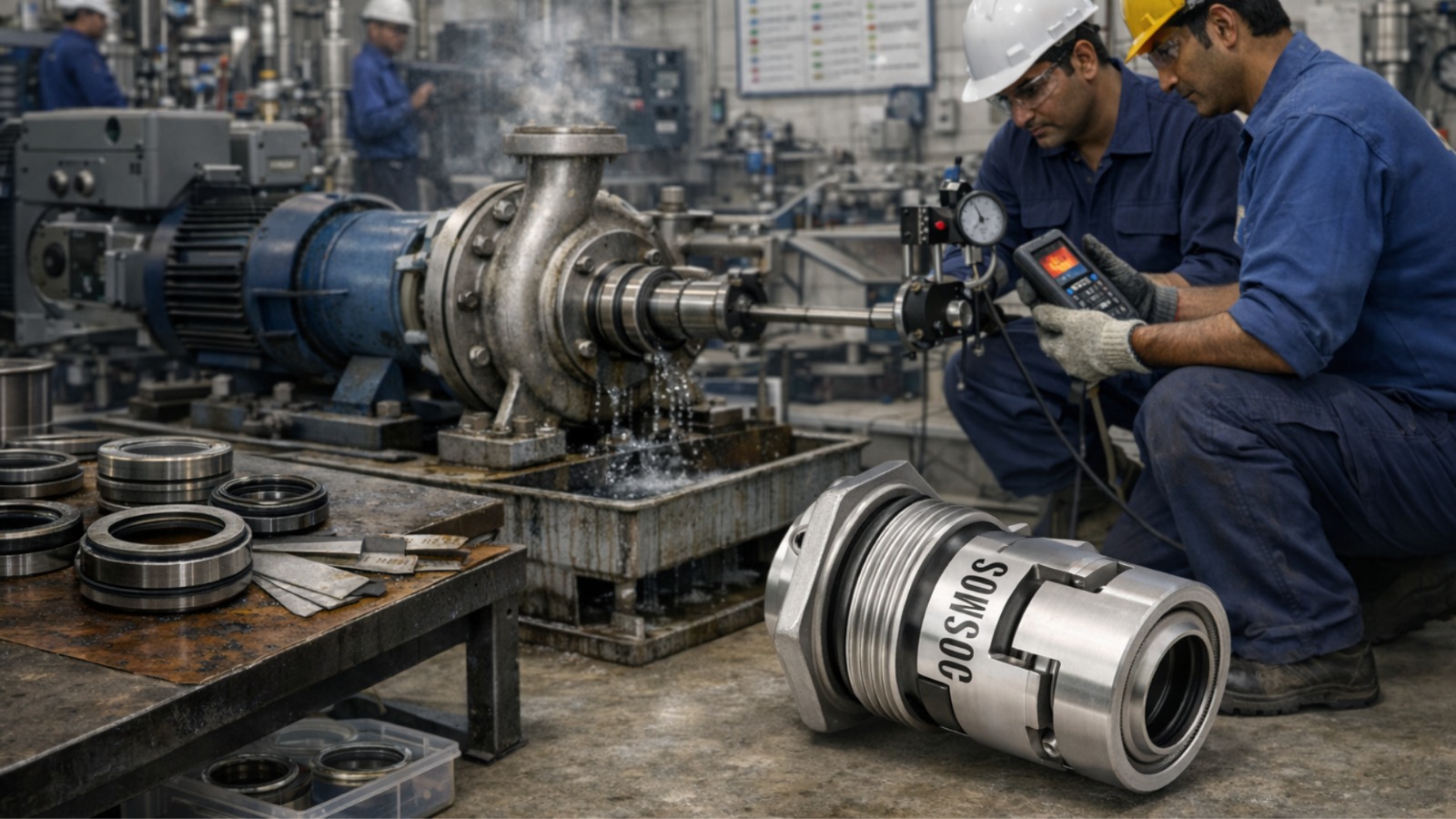
Ignoring seal support requirements often leads to premature seal failure, even when the correct seal type is selected. Integrated consideration of seal and support system design is essential for reliable pump operation.
Application Examples Across Industries
Different industries rely on specific mechanical seal types based on their process requirements. Chemical processing plants often use corrosion-resistant component or cartridge seals designed for aggressive fluids. Power plants and refineries typically employ heavy-duty cartridge seals capable of handling high pressures and temperatures.
Pharmaceutical and food processing industries favour hygienic seal designs that support clean operations and regulatory compliance. Water treatment facilities often use robust seals designed for continuous duty and variable water quality.
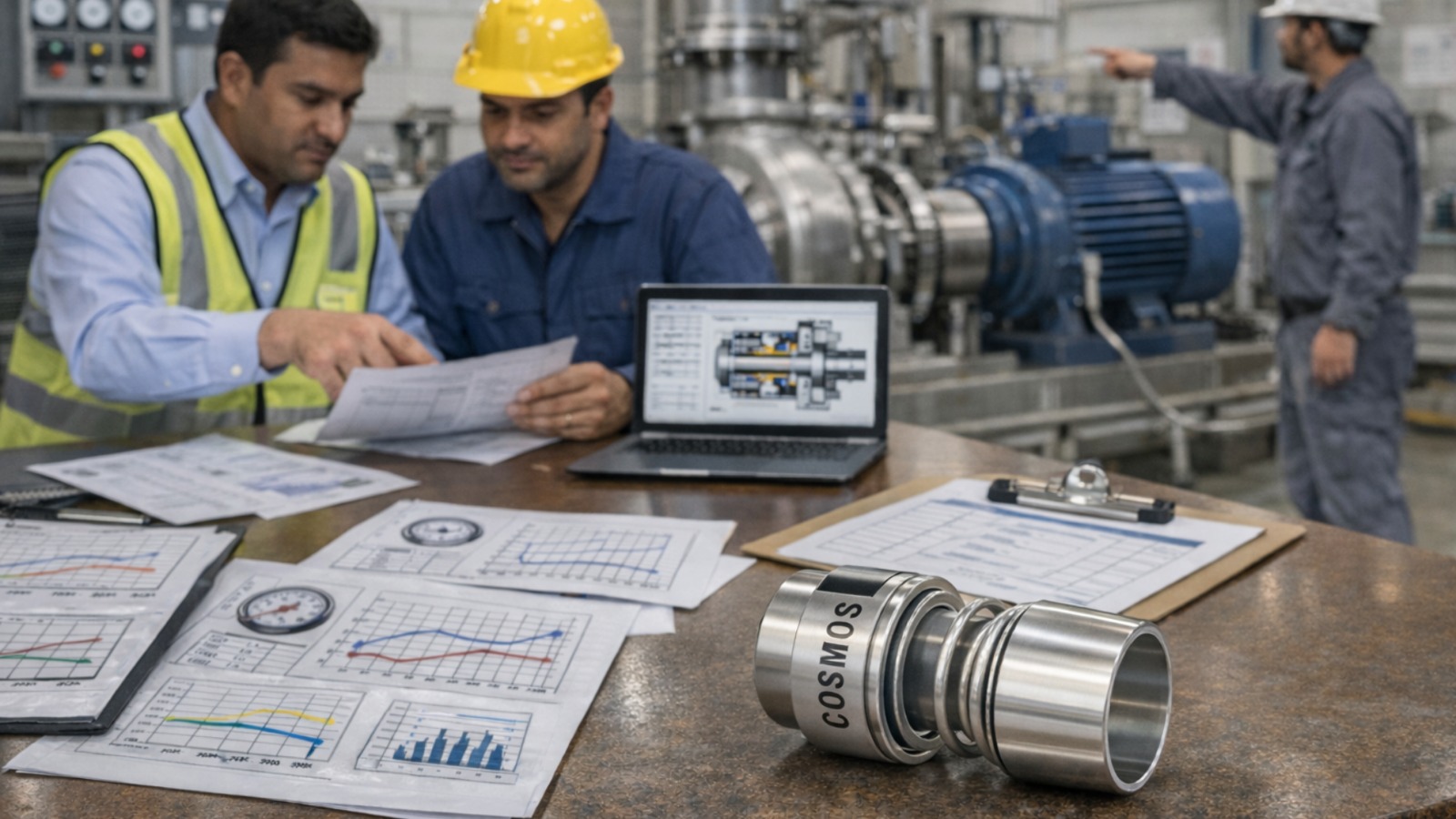
Cosmos Seals supplies a wide range of mechanical seals for industrial pumps, including component seals, cartridge mechanical seals, and agitator mechanical seals, engineered to meet diverse application requirements.
Call to Action
Selecting the right type of mechanical seal for industrial pumps requires a clear understanding of pump design, operating conditions, and application demands. Cosmos Seals supports customers with engineered sealing solutions designed for reliable, long-term pump performance.
Dry Running: The Silent Destroyer of Mechanical Seals One of the most common reasons behind mechanical seal failure is dry running. Mechanical seals are specifically designed to function with a thin layer of fluid between the seal faces, which acts as lubrication and cooling support during operation. When this lubrication disappears, friction increases rapidly, generating […]
Why Industries Don’t Just Pick Any Mechanical Seal Supplier When industrial buyers search for a list of mechanical seal manufacturers, they are usually trying to avoid operational risk rather than simply comparing prices. Mechanical seals directly affect equipment uptime because pumps, agitators, and compressors cannot function reliably if sealing performance is unstable. Whether it is […]
We are proud to share that Cosmos Seals India Pvt. Ltd. has been featured in Industry Outlook Magazine under the title: “Cosmos Seals India – A Trusted Manufacturer & Exporter Of Premium Quality Seals With Seamless Finish.” This feature highlights the company’s growing presence in the industrial sealing solutions sector and also recognizes the leadership […]
Cost vs Performance Balance For purchase managers, mechanical seals are often evaluated primarily on unit price, especially when procurement targets are cost-driven. However, mechanical seals are not commodity items; they are precision-engineered components whose performance directly influences equipment uptime, safety, and maintenance costs. A lower-priced seal may appear attractive during procurement, but if it is […]
Why Seals Fail Prematurely Premature Mechanical seal Failure is one of the most persistent reliability challenges in industrial operations. Mechanical seals are engineered components designed to operate under tightly defined conditions, yet in real-world environments, they are often exposed to variables that exceed their design assumptions. When this happens, even high-quality seals can fail much […]