Common Causes of Mechanical Seal Failure and How to Prevent Them
June 11, 2026•13 min read
Dry Running: The Silent Destroyer of Mechanical Seals
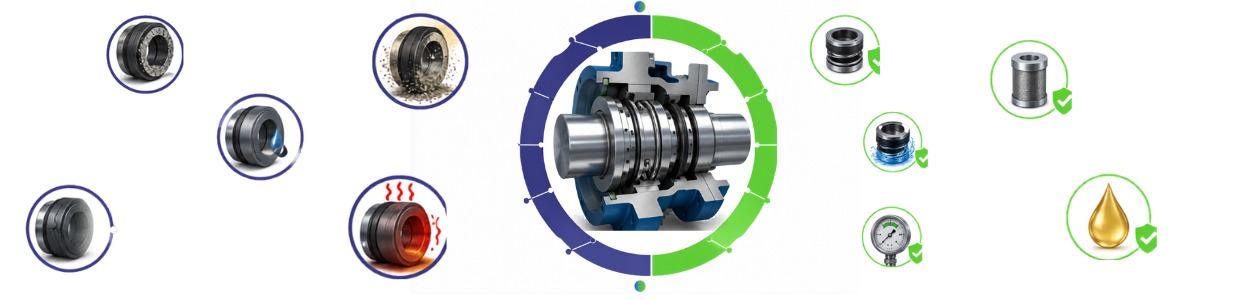
One of the most common reasons behind mechanical seal failure is dry running. Mechanical seals are specifically designed to function with a thin layer of fluid between the seal faces, which acts as lubrication and cooling support during operation. When this lubrication disappears, friction increases rapidly, generating excessive heat that damages the sealing surfaces. Industries relying heavily on mechanical seal services, industrial sealing solutions, and pump sealing systems often experience sudden equipment breakdowns because dry running can destroy a seal within minutes if left unnoticed.
Dry running generally occurs because of improper pump priming, blocked suction lines, low fluid levels, air pockets inside pipelines, or operational negligence. In many industrial facilities, pumps are started without ensuring sufficient liquid flow, causing immediate overheating within the seal chamber. Businesses using pump maintenance services, industrial pump seals, and mechanical seal replacement services frequently face expensive downtime due to this issue. The situation becomes even more critical in chemical processing and manufacturing plants where uninterrupted fluid movement is essential for operational stability. Lack of monitoring systems and delayed operator response can further increase the severity of seal damage and production losses.
Preventing dry running requires a combination of preventive maintenance and operational awareness. Installing dry-run protection devices, flow sensors, and temperature monitoring systems can help detect abnormal conditions before major failures occur. Companies offering mechanical seal installation, seal repair services, and industrial maintenance solutions recommend conducting regular inspections to identify early warning signs such as unusual noise, vibration, or rising temperatures. Proper pump priming, maintaining adequate lubrication, and training operators on safe startup procedures significantly improve seal lifespan. A proactive maintenance strategy not only reduces repair expenses but also enhances overall equipment reliability, efficiency, and productivity across industrial applications.
Excessive Heat Buildup: When Temperature Becomes the Enemy
Heat is one of the biggest threats to the performance and durability of mechanical seals in industrial applications. Mechanical seals operate under constant friction, and when excessive heat builds up, it causes thermal distortion, seal face cracking, elastomer hardening, and lubrication breakdown. Industries that depend on industrial sealing systems, high-temperature mechanical seals, and pump sealing services often experience unexpected equipment failures because of poor thermal management. Even high-quality seals can fail prematurely if exposed to extreme operating temperatures for long durations without adequate cooling support.
Excessive heat generation usually occurs because of insufficient cooling systems, incorrect seal material selection, excessive friction, or operating equipment beyond recommended pressure and speed limits. In many manufacturing plants, pumps continue running under overload conditions, increasing internal temperatures significantly. Businesses using mechanical seal repair services, industrial pump maintenance, and custom seal manufacturing solutions often overlook the importance of selecting seals specifically designed for high-temperature applications. In addition, contaminated fluids and poor ventilation further intensify heat-related damage by increasing friction within the seal chamber. Over time, thermal stress weakens the seal components, resulting in leakage, operational inefficiency, and costly downtime.
Preventing overheating requires a well-planned maintenance and monitoring strategy. Companies providing seal support systems, industrial sealing products, and pump maintenance services recommend regularly checking cooling arrangements, lubrication flow, and operating temperatures to ensure stable performance. Selecting suitable seal face materials for the specific application also plays a major role in improving durability. Installing temperature sensors and automated monitoring systems can help detect abnormal heat levels before severe damage occurs. Proper thermal management practices not only extend the lifespan of mechanical seals but also improve equipment reliability, reduce maintenance expenses, and ensure smoother industrial operations in demanding working environments.
Contamination Problems That Gradually Destroy Seal Performance
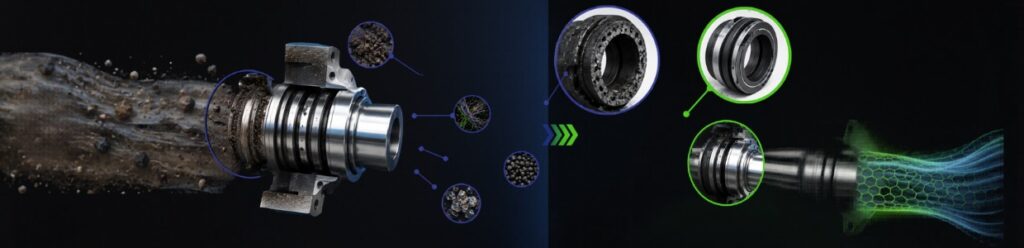
Contamination is one of the most overlooked yet highly destructive causes of mechanical seal failure in industrial systems. Small particles such as dust, abrasive materials, chemical impurities, and process debris can enter the sealing area and damage the seal faces over time. Industries relying on industrial sealing solutions, mechanical seal replacement services, and pump sealing systems frequently encounter leakage issues because contamination often remains unnoticed until severe damage has already occurred. Even microscopic particles can compromise sealing efficiency and reduce the overall reliability of industrial equipment.
When contaminants circulate between the seal faces, they create scratches, uneven wear patterns, and excessive friction that gradually weaken the sealing surfaces. Abrasive particles can also clog flushing systems and disrupt lubrication flow, increasing operating temperatures inside the seal chamber. Businesses using industrial pump seals,cartridge mechanical seals, and seal repair services often experience reduced seal lifespan because contaminated fluids accelerate internal wear. In chemical processing and manufacturing industries, corrosive substances present in fluids can further deteriorate seal materials, causing swelling, cracking, or chemical degradation. Poor storage practices and unclean installation procedures also contribute significantly to contamination-related failures.
Preventing contamination requires a strong preventive maintenance strategy and proper fluid management systems. Companies offering mechanical seal services, industrial maintenance solutions, and pump maintenance services recommend installing high-quality filtration systems to remove harmful particles before they reach the sealing components. Operators should ensure that seal components are handled carefully in clean environments during installation and maintenance procedures. Regular inspection of flushing systems, lubrication flow, and fluid cleanliness can help identify contamination problems early. Maintaining clean operating conditions not only extends the life of mechanical seals but also improves equipment efficiency, reduces maintenance costs, and minimizes unplanned industrial downtime across demanding applications.
Misalignment Issues That Lead to Unexpected Seal Failure
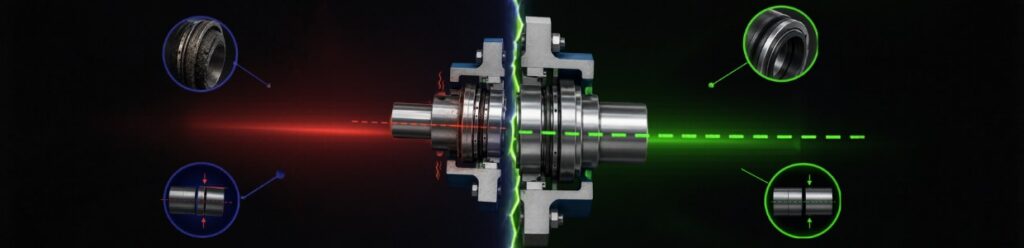
Improper alignment is a hidden but highly damaging factor behind many cases of mechanical seal failure in industrial equipment. Mechanical seals are designed to operate with precise shaft alignment, and even slight deviations can create excessive stress on the sealing components. Industries depending on industrial sealing systems, pump alignment services, and mechanical seal maintenance often experience recurring leakage and vibration issues because alignment problems remain undetected for long periods. Misalignment not only affects the seal but also damages bearings, shafts, and rotating equipment over time.
Misalignment commonly occurs during equipment installation, maintenance procedures, or because of operational vibrations that gradually shift component positions. When shafts rotate unevenly, the seal faces experience irregular pressure and excessive movement, causing uneven wear and friction. Businesses using industrial pump repair services, seal replacement solutions, and rotating equipment maintenance frequently encounter premature seal failures due to poor alignment practices. Excessive shaft movement also damages secondary sealing elements such as O-rings and elastomers, reducing the overall efficiency of the sealing system. In high-speed industrial applications, even minor alignment issues can quickly escalate into severe equipment damage and costly downtime.
Preventing alignment-related failures requires precision installation techniques and routine monitoring systems. Companies providing mechanical seal installation services, industrial maintenance solutions, and pump sealing services recommend using laser alignment tools for accurate shaft positioning. Regular vibration analysis and equipment inspections help identify alignment problems before they become critical. Proper foundation support and balanced rotating components also improve overall system stability. By maintaining accurate alignment, industries can significantly extend the lifespan of mechanical seals, improve machinery performance, reduce maintenance frequency, and ensure smoother operations in demanding industrial environments.
Incorrect Seal Selection Can Cost Industries Thousands
Choosing the wrong seal for an industrial application is one of the leading causes of mechanical seal failure and operational inefficiency. Every industrial process has unique operating conditions involving pressure, temperature, fluid type, rotational speed, and chemical compatibility. When businesses install unsuitable seals, they often face leakage, corrosion, overheating, and premature equipment breakdowns. Industries relying on custom mechanical seals, industrial sealing products, and pump sealing solutions must carefully evaluate their process requirements to avoid expensive maintenance issues and unexpected downtime.
Many industries make the mistake of prioritizing cost over compatibility while selecting sealing systems. A seal designed for water-based applications may fail rapidly when exposed to abrasive slurries, corrosive chemicals, or high-temperature fluids. Businesses using mechanical seal replacement services, industrial pump seals, and seal repair solutions frequently encounter recurring failures because incorrect seal materials cannot withstand demanding operating environments. In addition, selecting the wrong elastomer or seal face material can result in swelling, cracking, or thermal damage under extreme conditions. Lack of technical consultation during the selection process often leads to repeated operational disruptions and increased maintenance expenses.
Preventing seal selection errors requires proper technical evaluation and expert consultation. Companies offering mechanical seal services, industrial maintenance solutions, and custom seal manufacturing recommend analyzing application-specific factors such as fluid properties, operating temperatures, and pressure conditions before choosing a sealing system. Using high-quality materials specifically designed for the intended environment significantly improves durability and performance. Consulting experienced sealing professionals ensures that the right seal configuration is selected for maximum efficiency. Proper seal selection not only enhances equipment reliability but also reduces operational costs, minimizes downtime, and improves productivity across industrial applications.
Pressure Imbalance: A Major Cause of Seal Leakage
Pressure fluctuations within industrial systems are a major contributor to mechanical seal failure and leakage problems. Mechanical seals are engineered to operate within specific pressure ranges, and sudden pressure changes can place excessive stress on the sealing surfaces. Industries depending on high-pressure sealing systems, industrial pump seals, and mechanical seal services often experience premature seal wear because unstable operating conditions create friction, distortion, and thermal stress inside the seal chamber. Continuous exposure to pressure imbalance significantly reduces seal lifespan and affects overall equipment reliability.
Pressure-related failures commonly occur because of rapid valve closures, pump cavitation, blocked pipelines, or incorrect system design. Sudden pressure spikes can force the seal faces apart, causing leakage and surface damage. Businesses using pump maintenance services, industrial sealing solutions, and seal repair services frequently face operational downtime when pressure fluctuations remain uncontrolled. In some industrial applications, vacuum conditions also contribute to seal instability by disrupting lubrication flow and increasing friction between sealing surfaces. Over time, repeated pressure shocks weaken internal components and create long-term reliability issues across rotating equipment systems.
Preventing pressure imbalance requires stable system operation and continuous monitoring of pressure conditions. Companies providing mechanical seal installation, industrial maintenance services, and pump sealing systems recommend installing pressure control devices and automated monitoring instruments to maintain safe operating levels. Proper pipeline design and controlled startup procedures also help reduce sudden pressure changes. Regular inspections of valves, pumps, and support systems ensure smoother fluid flow and minimize operational stress on sealing components. Maintaining balanced pressure conditions improves the durability of mechanical seals, reduces maintenance frequency, and enhances the efficiency of industrial machinery in demanding applications.
Improper Installation Practices That Reduce Seal Lifespan
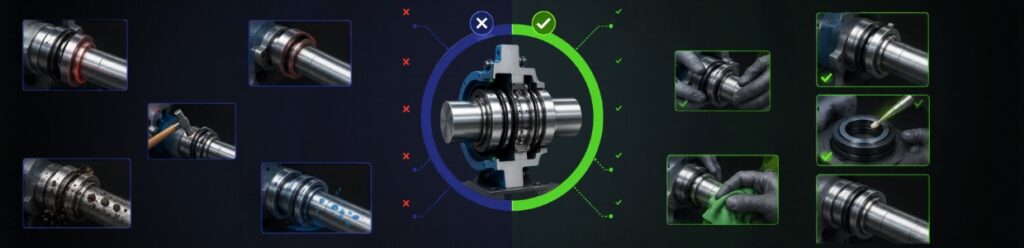
Improper installation is one of the most preventable causes of mechanical seal failure, yet it remains a frequent issue across industrial applications. Even premium-quality seals can fail prematurely if installation procedures are not followed correctly. Industries relying on mechanical seal installation services, industrial sealing systems, and pump maintenance services often experience leakage and operational inefficiencies because seals are mishandled during assembly. Small mistakes during installation can create long-term reliability problems and increase maintenance costs significantly.
Common installation errors include touching seal faces with dirty hands, applying uneven pressure during tightening, improper shaft positioning, and failing to lubricate components correctly before assembly. Businesses using industrial pump seals, seal replacement services, and mechanical seal repair solutions frequently encounter failures because damaged or contaminated seal faces increase friction and heat generation during operation. Incorrect alignment during installation also creates unnecessary stress on rotating components, leading to vibration, leakage, and premature wear. In many industrial facilities, the absence of trained technicians further increases the chances of installation-related failures.
Preventing installation problems requires proper training, clean working conditions, and adherence to manufacturer guidelines. Companies offering professional mechanical seal services, industrial equipment maintenance, and pump sealing solutions recommend using specialized installation tools and following standardized assembly procedures. Technicians should carefully inspect all components before installation to ensure cleanliness and proper alignment. Lubrication should be applied correctly to prevent dry friction during startup. Regular training programs for maintenance teams can further improve installation accuracy and operational efficiency. Proper installation practices not only extend the lifespan of mechanical seals but also improve equipment performance, reduce downtime, and lower long-term maintenance expenses.
Lack of Preventive Maintenance Leads to Expensive Downtime
Neglecting preventive maintenance is one of the biggest reasons industries face recurring mechanical seal failure and costly operational downtime. Mechanical seals operate continuously under pressure, heat, and friction, making regular inspections essential for maintaining performance. Industries relying on mechanical seal maintenance services, industrial sealing solutions, and pump maintenance systems often experience sudden equipment breakdowns because small issues remain unnoticed until they develop into major failures. A reactive maintenance approach not only increases repair costs but also disrupts productivity and operational efficiency.
Over time, seal components naturally wear because of continuous operation, fluid exposure, and environmental conditions. Businesses using industrial pump seals, seal repair services, and mechanical seal replacement solutions frequently ignore early warning signs such as leakage, abnormal vibration, or rising temperatures. Without regular inspections, these minor problems can quickly escalate into severe equipment damage and production losses. In many manufacturing plants, maintenance schedules are delayed due to operational pressure, resulting in higher downtime costs and reduced machinery lifespan. Poor monitoring systems further increase the risk of unexpected failures.
Preventing maintenance-related failures requires a proactive and structured maintenance strategy. Companies providing industrial maintenance services, pump sealing solutions, and mechanical seal servicing recommend conducting routine inspections of temperature, vibration, pressure, and leakage levels. Predictive maintenance technologies and automated monitoring systems can help identify wear patterns before critical damage occurs. Replacing worn components at the right time significantly improves equipment reliability and operational stability. A strong preventive maintenance program not only extends the lifespan of mechanical seals but also reduces emergency repair costs, improves industrial productivity, and ensures smoother long-term equipment performance.
CTA
Protect your industrial equipment from costly downtime with reliable mechanical seal services, industrial sealing solutions, and expert pump maintenance services from Cosmos Seals. Whether you need mechanical seal replacement, custom sealing solutions, or professional installation support, our team ensures long-lasting performance and operational efficiency for your systems. Contact us today to improve reliability and reduce maintenance costs. Call +91 97691 33001, email info@cosmosseals.com, or visitwww.cosmosseals.com for trusted sealing expertise.
FAQs
Q1. What is the most common cause of mechanical seal failure?
A1. Dry running is one of the most common causes, as it creates excessive heat and damages the seal faces quickly.
Q2. How can contamination affect mechanical seals?
A2. Dirt and abrasive particles scratch seal faces, increase wear, and eventually lead to leakage and reduced seal efficiency.
Q3. Why is proper seal selection important?
A3. Selecting the right seal ensures compatibility with pressure, temperature, and fluid conditions, improving performance and lifespan.
Q4. How often should mechanical seals be inspected?
A4. Regular inspections should be conducted as part of preventive maintenance to identify wear, leakage, or alignment issues early.
The Critical Role of Mechanical Seals in Oil and Gas Operations The oil and gas industry operates under some of the most demanding conditions, where equipment reliability and safety are extremely important. Pumps, compressors, and rotating machinery handle high pressure, extreme temperatures, and aggressive fluids, making mechanical seals an essential component for preventing leakage and […]
Introduction longer equipment life, and reduced maintenance costs in industrial applications. Whether used in pumps, mixers, compressors, or process equipment, the correct seal material and design directly influence the efficiency and reliability of rotating machinery. Selecting the wrong elastomer can lead to premature seal failure, costly downtime, and frequent replacements. Industries such as chemical processing, […]
Introduction In today’s fast-paced industrial environment, machinery is expected to deliver consistent performance with minimal downtime. One of the most important yet often overlooked components that contribute to this reliability is the Low Friction Mechanical Seal. These advanced sealing solutions reduce wear, minimize energy consumption, and improve equipment efficiency across a wide range of industries. […]
In modern industries, maintaining the efficiency and reliability of rotating equipment is essential for smooth operations. Cartridge mechanical seals have become a preferred sealing solution across various sectors due to their easy installation, improved performance, and ability to handle challenging operating conditions. These advanced seals help prevent leakage, reduce maintenance requirements, and enhance the overall […]
High-temperature industrial applications demand sealing solutions that can withstand extreme heat, pressure, and challenging operating conditions without compromising performance. Whether in chemical processing, power generation, oil & gas, pharmaceuticals, or manufacturing plants, selecting the right high-temperature mechanical seals is crucial for maintaining equipment reliability and preventing costly downtime. A poorly selected seal can lead to […]
Introduction In industries where reliability, precision, and efficiency are non-negotiable, choosing the right sealing solution can significantly impact equipment performance. Metal Bellow Mechanical Seals are engineered to provide exceptional sealing capabilities in demanding environments where conventional seals may fail. Designed without dynamic elastomers, these seals utilize precision-formed metallic bellows that accommodate thermal expansion, shaft movement, […]