How to Select the Right Cartridge Seal for Hydrocarbon Duty in Refineries
December 13, 2025•11 min read
INTRODUCTION
Select the right Cartridge Seal for Hydrocarbon Duty in Refineries. Hydrocarbon processing units inside refineries operate under some of the most demanding mechanical, thermal, and chemical conditions found in any industrial environment. Pumps and rotating equipment must manage volatile media, fluctuating pressures, sudden thermal swings, abrasive contamination, and strict safety compliance. Among all rotating components, the mechanical seal remains one of the smallest parts — but also the most critical to achieving operational reliability and zero leakage.
When dealing specifically with hydrocarbons, the challenges multiply. Light-end hydrocarbons like LPG flash easily. Middle distillates attack weak elastomers. Heavy petroleum fractions contain particulates that can destroy faces. High-temperature aromatic streams weaken standard metal combinations. Under these realities, cartridge seals have become the preferred choice for refineries, offering installation accuracy, protection against misalignment, and enhanced stability.
But choosing the right cartridge seal is not a matter of catalogue selection. It demands an understanding of fluid behaviour, seal face physics, metallurgy compatibility, and operating duty cycles. This blog serves as a comprehensive guide to help refinery engineers, maintenance personnel, and procurement managers make an informed decision that protects uptime, equipment life, and plant safety.
Why Cartridge Seals Are the Gold Standard for Hydrocarbon Duty
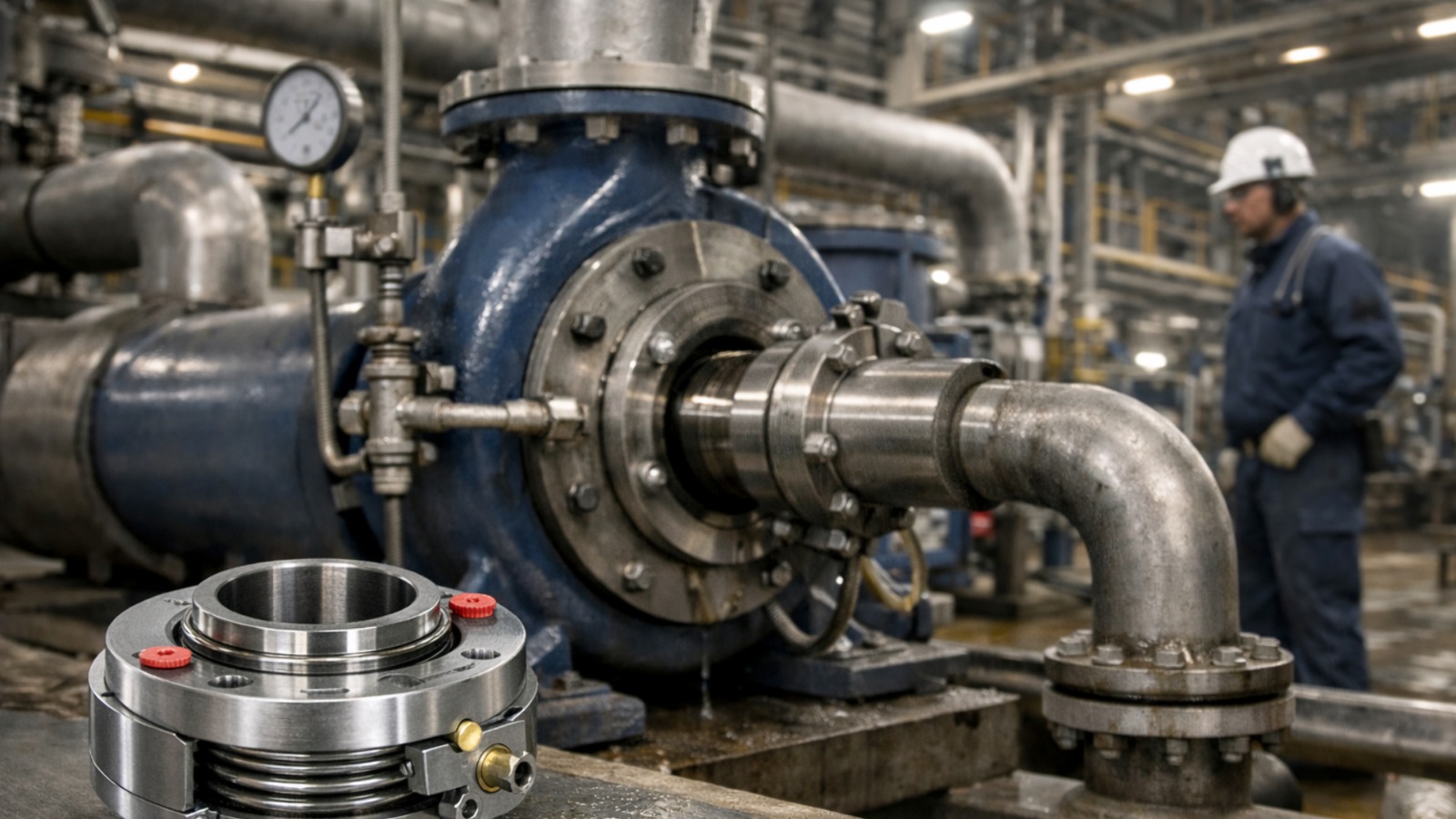
Cartridge seals are self-contained assemblies where faces, springs, gland, sleeve, and O-rings come pre-set. Unlike component seals, their installation does not depend heavily on technician skill and alignment accuracy. For hydrocarbon duty — where an installation error can cause immediate flashing, leakage, or seal burnout — this design advantage becomes a major risk eliminator.
In refinery services, the seal chamber environment is often unpredictable. Pumps may experience sudden pressure spikes, inconsistent lubrication film thickness, vaporisation at the seal faces, or thermal shock during product changeovers. Cartridge seals, especially API-compliant designs, handle these conditions with far greater reliability because they maintain:
Correct face loading
Shaft protection
Stable alignment
Predictable barrier or buffer fluid circulation
Control of heat generation
In essence, cartridge seals reduce human error while increasing operational repeatability — a combination refinery cannot compromise on.
Understanding Hydrocarbon Behaviour Is the Foundation of Seal Selection
The right cartridge seal for refinery service begins with studying the fluid itself. Hydrocarbons vary extensively — from low-viscosity light fractions to heavy asphaltic materials. Each category poses unique sealing challenges. The uploaded document highlights that the primary failure modes in hydrocarbon duty often originate from:
Vaporisation at the seal faces
Poor heat dissipation
Wrong face selection
Incorrect metallurgical pairing
Incompatible elastomers
Absence or inefficiency of a support system
To address these, refinery engineers must analyse fluid properties such as vapor pressure, flash point, viscosity, chemical aggressiveness, andcontamination potential.
For example, fluids with high vapor pressure such as propane, butane, or naphtha tend to flash at the sealing interface if heat is not controlled. On the other hand, heavy hydrocarbons like vacuum residue introduce abrasive fines that wear out faces prematurely. A cartridge seal designed for hydrocarbon duty must therefore manage two opposing threats simultaneously — prevent vapour formation and resist abrasive or chemical attack. This is where face materials, metallurgy and API plan selection play a decisive role.
Choosing the Right Seal Face Pairing for Hydrocarbons
Seal faces are the core of a mechanical seal’s performance. Their combination determines heat generation, friction, leakage control, and longevity. In hydrocarbon pumps, the choice of faces must balance three requirements:
Low friction to minimise heat
High resilience to chemical and thermal exposure
Resistance to dry-running and flashing conditions
Carbon vs. Silicon Carbide is a common pairing in universal duty, but refineries often require more robust options depending on the service:
Silicon Carbide–Silicon Carbide
Preferred for services with abrasive particles or where fluid lubrication is weak. The hardness prevents premature wear.
Tungsten Carbide–Carbon
Ideal when moderate abrasives exist but carbon lubrication is needed to avoid thermal runaway.
Tungsten Carbide–Tungsten Carbide
Selected for extremely tough and contaminated hydrocarbon streams where contact faces are exposed to repeated shock loads.
The choice also depends on pump speed, temperature profile, and the type of API support plan used. The seal must maintain a stable fluid film to avoid flashing. Otherwise even the hardest face pairs will fail under vaporisation.
Metallurgy Selection: The Backbone of Seal Durability in Refineries
Hydrocarbon streams often carry sulfur, aromatics, corrosive gases, and trace contaminants that attack weak metallurgy. Seal metal components — gland plate, sleeve, springs — must resist corrosion while maintaining mechanical strength under high temperature. Common materials include:
SS 316 / SS304 for general-duty hydrocarbons
Hastelloy C276 for sour service and high sulfur content
Duplex stainless steels for improved strength and corrosion resistance
Alloy 20 for acidic hydrocarbon media
When fluid composition includes H₂S (e.g., sour crude, sour gas), metallurgy must comply with NACE MR0103/MR0175 to prevent sulfide stress cracking. Seal failure in these cases can result not just in leakage but severe safety hazards.
Metallurgy must also handle rapid temperature changes, especially in units like CDU, VDU, FCC, reformers, and hydrotreaters where product switching and cyclic duty are common.
Elastomer Selection: Preventing Swelling, Shrinkage, and Leakage
Elastomers determine the sealing system’s compatibility with hydrocarbons. Wrong elastomers may swell, shrink, harden, or crack — leading to catastrophic leakage. Refinery-grade elastomers include:
When it comes to hydrocarbons, the elastomer choice is just as critical as the face and metallurgy selection, because the wrong elastomer can swell, harden, shrink, or chemically break down inside the seal chamber.
Viton (FKM) remains the most widely used option in refinery pumps, offering strong resistance to fuels, light hydrocarbons, and most petroleum fractions. It maintains flexibility under high temperature and provides reliable sealing over long cycles. For more aggressive environments, especially where amines or certain aromatic hydrocarbons are present,
AFLAS offers a superior balance of chemical resistance and thermal stability. It handles amine exposure far better than standard Viton and prevents degradation during prolonged duty cycles. At the highest performance tier sits FFKM (Kalrez), a premium elastomer designed for extremely demanding chemical and temperature conditions. Kalrez delivers near-universal chemical compatibility and maintains its sealing integrity even when exposed to harsh aromatics, aggressive solvents, or high-temperature hydrocarbon streams.
EPDM or Nitrile should almost never be used for hydrocarbon duty as they degrade quickly when exposed to petroleum products. The uploaded file rightly emphasises elastomer selection as a critical determinant of seal longevity.
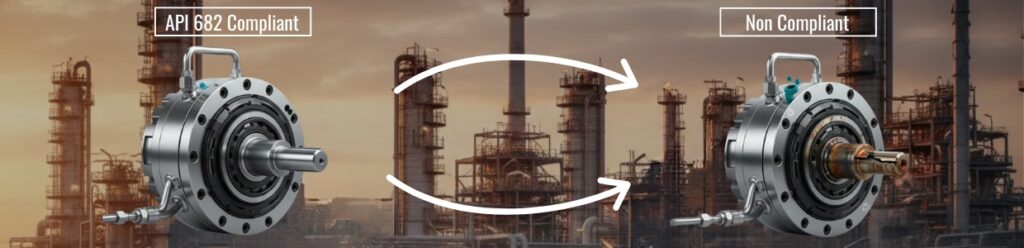
Why API 682 Compliance Matterse
API 682 was specifically designed for refinery sealing conditions. It standardises seal design, testing, materials, and support systems to ensure predictable behaviour under refinery stress. Choosing an API 682–compliant cartridge seal ensures a level of predictability and reliability that refineries depend on. These seals are engineered with
Standardised safety levels aligned with global refinery expectations
Proper face loading to prevent flashing and premature wear
Correct metallurgy selection for the specified hydrocarbon service
High-quality elastomers capable of withstanding hydrocarbon exposure
Defined test procedures to ensure consistent performance under refinery operating conditions
Full compatibility with API support plans for flushing, cooling, and barrier-fluid systems
Understanding Pump Conditions: The Often-Ignored Factor
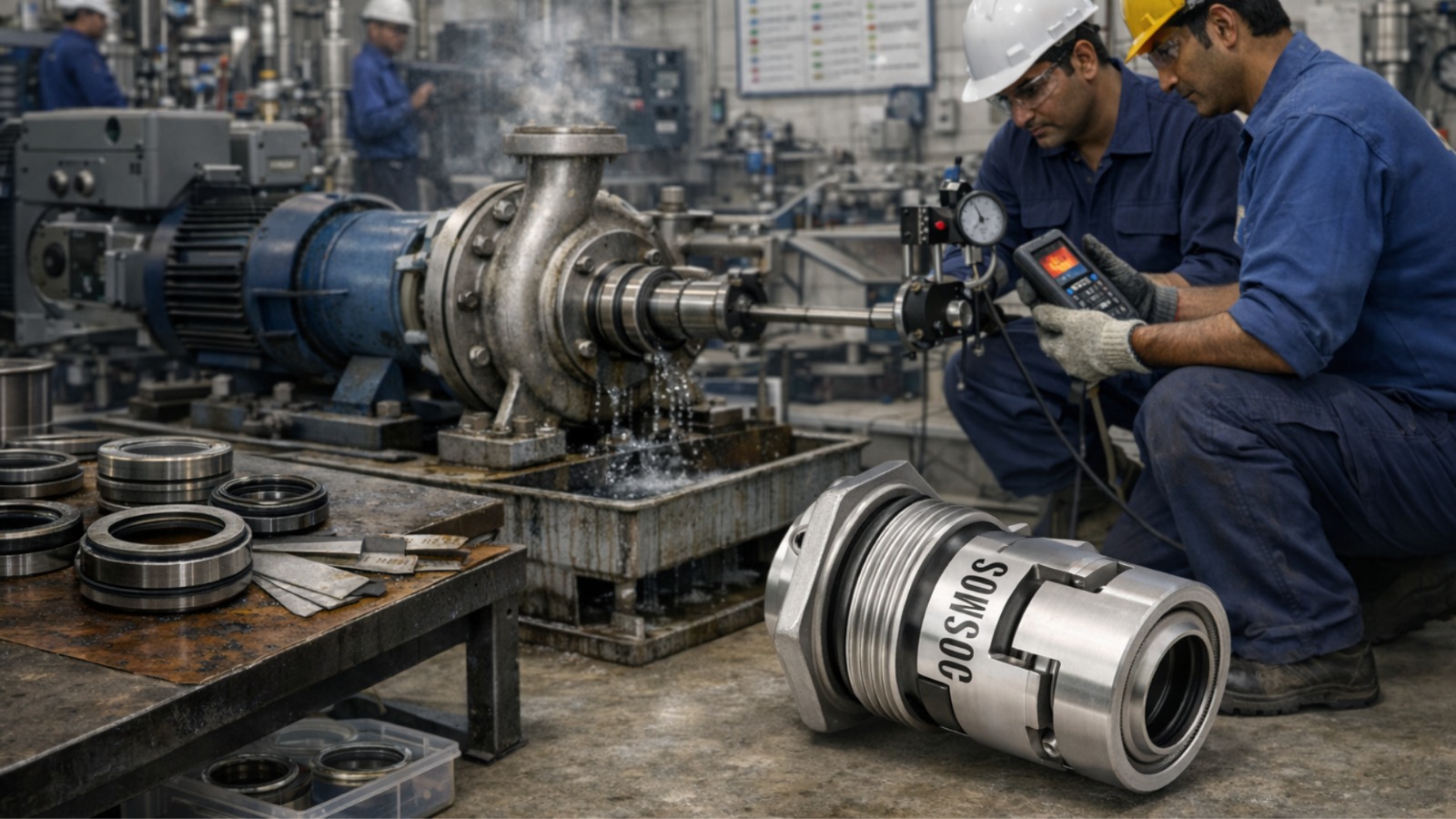
One of the most critical insights highlighted in the document is that even the best-engineered cartridge seal cannot compensate for poor pump behaviour. Seal performance is directly tied to how stable and healthy the pump is. If thepump suffers from misalignment, excessive vibration, imbalanced impellers, deteriorated bearings, air entrainment, or cavitation, the mechanical seal is forced to operate under unstable conditions that quickly destroy its lubrication film. Since seal faces rely on a thin, consistent layer of fluid for cooling and lubrication, any disturbance in pump behaviour disrupts this film, leading to rapid friction build-up, overheating, and ultimately seal failure. This is why engineers must thoroughly assess pump health before deciding on a seal. The evaluation should include checking shaft runout, verifying bearing condition, inspecting impeller balance and wear, confirming that pump speed is within acceptable limits, and reviewing how operating pressure varies during the duty cycle. It is equally important to understand the real seal chamber pressure and ensure that the pump maintains adequate NPSH to prevent vaporisation at the eye of the impeller, which can travel downstream and destabilise the seal chamber environment. In essence, a reliable cartridge seal is not just a component — it is the outcome of proper design, a healthy pump, stable operating behaviour, and disciplined maintenance practices. When these elements work together, the seal performs predictably and delivers long operational life even under demanding hydrocarbon service
Single vs Double Cartridge Seals: Making the Right Decision
Single Cartridge Seals Suitable for stable, non-volatile hydrocarbon services where leakage tolerance is not extremely stringent.
Double Cartridge Seals Double cartridge seals are essential in refinery environments where the process fluid poses significant operational or safety risks. They are particularly critical when dealing with volatile hydrocarbons and light-end products, which tend to vaporise easily at the seal faces and cannot be safely contained with a single sealing interface. In services involving toxic, hazardous, or environmentally sensitive media, a double seal becomes mandatory because it provides an additional containment layer and ensures that the process fluid never reaches the atmosphere. These seals also play a vital role in high-temperature hydrocarbon streams, where thermal instability can cause flashing or coking inside the seal chamber. By creating a controlled barrier-fluid environment, double cartridge seals keep the faces properly lubricated and cooled, even when the process fluid itself cannot provide stable lubrication. They are equally important when pumps operate under conditions where the product film is weak, inconsistent, or prone to breakdown — situations commonly referred to as unstable lubricating conditions. In such cases, the secondary seal and pressurised barrier system take over the lubrication and cooling responsibilities, preventing dry-running, face damage, and thermal distortion. Because of these capabilities, double cartridge seals deliver the highest level of reliability and safety, making them the preferred choice for critical refinery pumps where zero leakage, stable operation, and long-term performance are non-negotiable. Dual seals create a controlled environment using barrier fluids, thereby eliminating vaporisation and adding a layer of protection for both plant personnel and equipment. Refineries typically prefer double seals for most critical pumps, especially in units where safety and emissions control are paramount.
Failure Modes to Avoid Through Proper Seal Selection
Incorrect cartridge seal selection in refinery service often reveals itself through a series of progressive and costly failure symptoms. One of the earliest and most dangerous indicators is the escape of vaporised hydrocarbons through the sealing interface, a sign that the seal faces are unable to maintain a stable lubricating film and the fluid is flashing at the contact zone. As conditions worsen, the faces may begin to develop heat-checking—fine cracks caused by repeated thermal stress—which further destabilises sealing performance. Over time, hydrocarbon decomposition can lead to coking and carbon deposition inside the seal chamber, restricting movement and damaging components. Elastomers also begin to show signs of distress when the wrong material is chosen, often swelling, hardening, or losing elasticity due to chemical incompatibility. Meanwhile, metal parts such as the sleeve may wear prematurely, and in more severe cases, the shaft itself can develop grooves from continuous friction or misalignment-related loading. The heat generated by these failures can even transfer back into the pump bearings, causing premature bearing degradation and compounding the overall mechanical breakdown. Almost every one of these failure modes can be traced back to fundamental selection errors—using the wrong face combination, choosing unsuitable metallurgy, relying on incompatible elastomers, or pairing the seal with an incorrect or ineffective support system. When the cartridge seal is selected correctly, taking into account fluid characteristics, thermal behaviour, pump dynamics, and support plan requirements, these issues are dramatically minimised, resulting in significantly lower downtime and reduced maintenance cost.
Key Steps to Selecting the Correct Cartridge Seal for Refinery Hydrocarbon Duty
To summarise the selection philosophy in a narrative (not bullet-heavy) manner: Begin with understanding the hydrocarbon’s nature — its vapor pressure, thermal characteristics, viscosity, flash point, and contamination risk. Once this is understood, move to the mechanical aspects: pump speed, chamber pressure, temperature profile, shaft movement, and potential for misalignment or vibration. With fluid and pump parameters mapped, choose seal faces that can withstand heat, resist wear, and prevent flashing. Next comes metallurgy; it must resist corrosion, sulfide stress, and thermal instability. Elastomers follow as the soft backbone, ensuring flexibility without degradation. Finally, pair the seal with the right API support plan. This support plan is often the deciding factor between a 3-month failure and a 3-year stable cycle. A cartridge seal tailored to these five pillars — fluid, pump conditions, faces, metallurgy, and support system — will deliver operational reliability far beyond standard choices.
Conclusion: Precision Engineering Is the Only Way to Seal Hydrocarbons Safely
In refinery operations, sealing hydrocarbons is not just an engineering requirement — it is a safety, environmental, and economic mandate. The right cartridge seal ensures zero leakage, stable operation, and long equipment life. The wrong one results in downtime, emissions, fire hazards, and costly shutdowns. A refinery-ready cartridge seal must combine the right faces, metallurgy, elastomers, API compliance, and support system selection. It must be engineered not only for performance but for the reality of refinery duty — heat, volatility, pressure shocks, and unpredictable contamination. When all these factors align, cartridge seals protect pumps, safeguard personnel, and help refineries achieve uninterrupted performance
Why Industries Don’t Just Pick Any Mechanical Seal Supplier When industrial buyers search for a list of mechanical seal manufacturers, they are usually trying to avoid operational risk rather than simply comparing prices. Mechanical seals directly affect equipment uptime because pumps, agitators, and compressors cannot function reliably if sealing performance is unstable. Whether it is […]
We are proud to share that Cosmos Seals India Pvt. Ltd. has been featured in Industry Outlook Magazine under the title: “Cosmos Seals India – A Trusted Manufacturer & Exporter Of Premium Quality Seals With Seamless Finish.” This feature highlights the company’s growing presence in the industrial sealing solutions sector and also recognizes the leadership […]
Cost vs Performance Balance For purchase managers, mechanical seals are often evaluated primarily on unit price, especially when procurement targets are cost-driven. However, mechanical seals are not commodity items; they are precision-engineered components whose performance directly influences equipment uptime, safety, and maintenance costs. A lower-priced seal may appear attractive during procurement, but if it is […]
Overview of Pump Sealing Systems Industrial pumps operate in demanding environments where controlling fluid leakage is essential for safety, efficiency, and equipment longevity. Pump sealing systems play a critical role by preventing process fluids from escaping along the rotating shaft while allowing smooth, reliable operation. Among available sealing options, mechanical seals are the most widely […]
Why Seals Fail Prematurely Premature Mechanical seal Failure is one of the most persistent reliability challenges in industrial operations. Mechanical seals are engineered components designed to operate under tightly defined conditions, yet in real-world environments, they are often exposed to variables that exceed their design assumptions. When this happens, even high-quality seals can fail much […]
Hygiene and Sterility Requirements Pharmaceutical manufacturing demands absolute control over contamination, making mechanical seals a critical component in maintaining sterile processing environments. Any leakage, crevice, or material incompatibility can compromise product quality and lead to batch rejection, regulatory scrutiny, or costly production downtime. Mechanical seals used in pharmaceutical applications must be designed with smooth surfaces, […]