How Mechanical Seals Work: Components, Working Principles and Functions
October 24, 2026•6 min read
Industrial pumps operate continuously in demanding environments, handling everything from clean water to chemicals, oils, and high-temperature fluids. Preventing leakage around rotating shafts is essential for safe and efficient operation. This is where mechanical seals play a critical role.
Understanding how mechanical seals work, their components, and their functions helps engineers and maintenance teams make better decisions about pump reliability, seal selection, and long-term equipment performance.
1. What Is a Mechanical Seal and Why Is It Essential for Industrial Pumps?
A mechanical seal is a precision-engineered device designed to control fluid leakage where a rotating shaft passes through a stationary pump housing. Unlike traditional packing arrangements, mechanical seals for industrial pumps use carefully designed sealing faces to maintain effective fluid containment during operation.
Industrial pumps operate under varying pressures, temperatures, and fluid conditions. A properly selected industrial mechanical seal helps minimize leakage, protect equipment, and maintain process efficiency. Its performance depends on the seal design, operating conditions, material compatibility, and installation quality.
From chemical processing to water treatment and manufacturing, pump mechanical seals support reliable fluid handling. Understanding their basic function helps maintenance teams recognize why selecting the correct sealing arrangement is important for both equipment protection and operational safety.
2. Inside a Mechanical Seal: Understanding Its Key Components
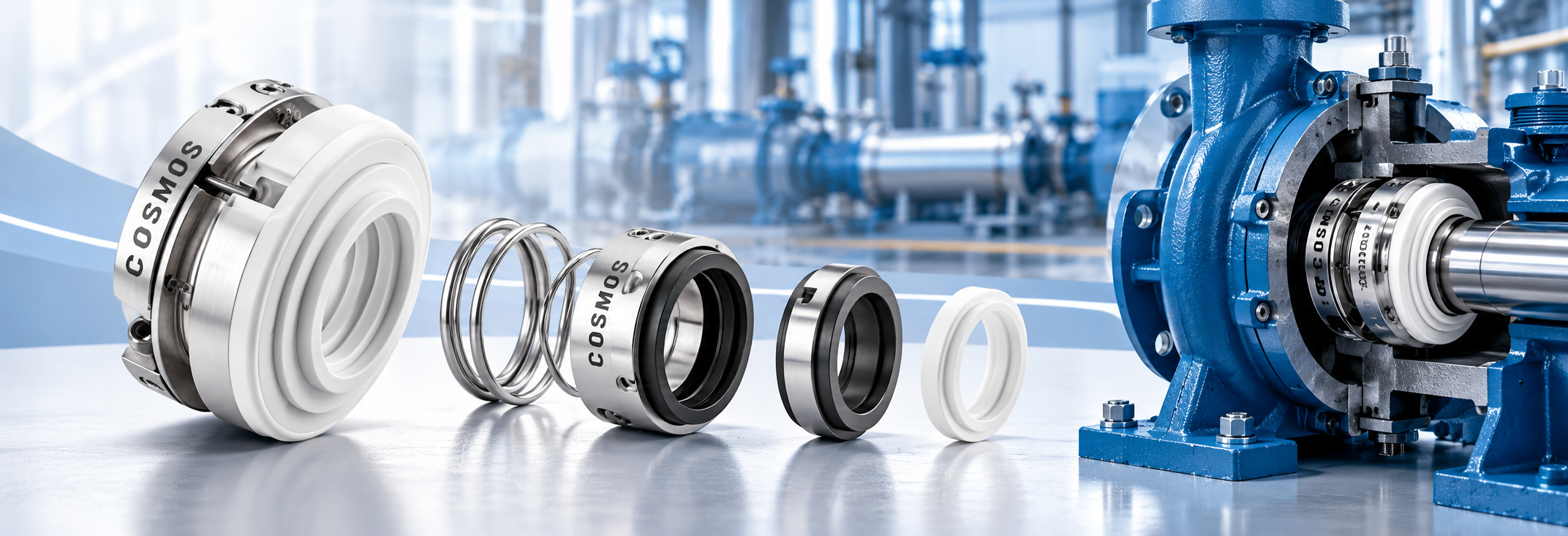
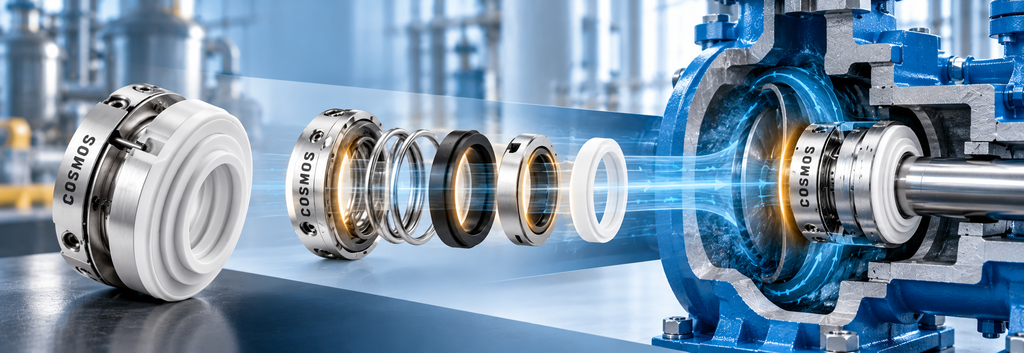
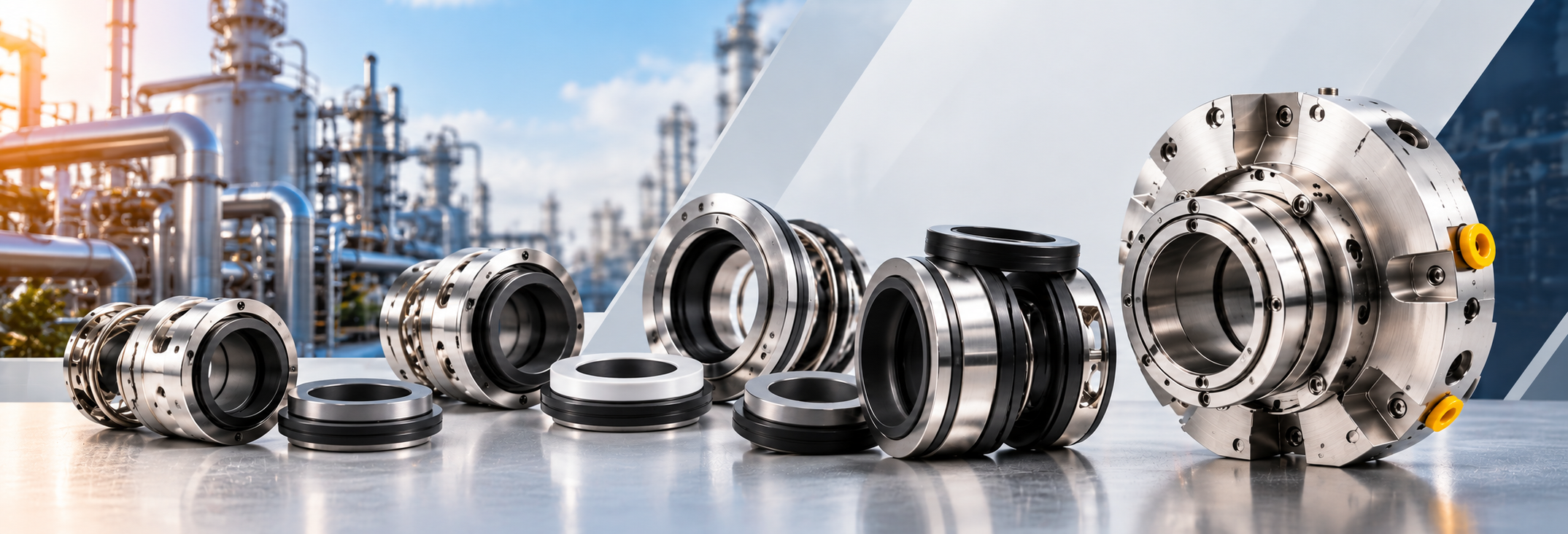
The most important parts of a mechanical seal assembly are the rotating and stationary seal faces. These precision-finished surfaces form the primary sealing interface, restricting fluid leakage while allowing the pump shaft to rotate. Their condition directly affects mechanical seal performance.
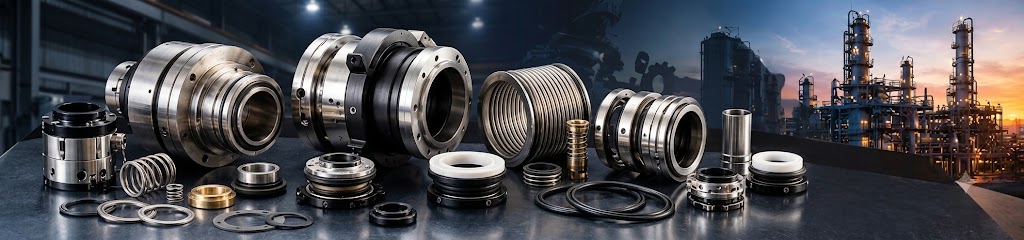
Other essential mechanical seal components include springs, O-rings, gaskets, sleeves, and retaining elements. Springs maintain the required closing force between the sealing faces, while secondary seals prevent leakage through other paths within the assembly. Each component contributes to overall sealing reliability.
Material selection is equally important. Carbon, silicon carbide, and tungsten carbide are commonly used for seal faces, while elastomers such as EPDM and FKM provide secondary sealing in compatible applications. Understanding these materials helps industries identify suitable mechanical sealing solutions.
3. How Mechanical Seals Work: The Science Behind Leak Control
The working principle of a mechanical seal involves two closely positioned sealing faces, one rotating with the shaft and the other remaining stationary. These faces create a controlled sealing interface that restricts process fluid from escaping along the rotating shaft.
During operation, a very thin fluid film typically separates the sealing faces, providing lubrication and helping manage frictional heat. The balance between hydraulic forces, spring loading, and fluid-film pressure is essential for maintaining effective mechanical seal operation.
When operating conditions are suitable, this arrangement helps achieve low leakage and controlled wear. However, inadequate lubrication, excessive heat, or unstable pump operation can damage the sealing faces. Understanding this process explains why correct mechanical seal selection and operating practices matter.
4. Different Mechanical Seal Designs and How Their Functions Vary
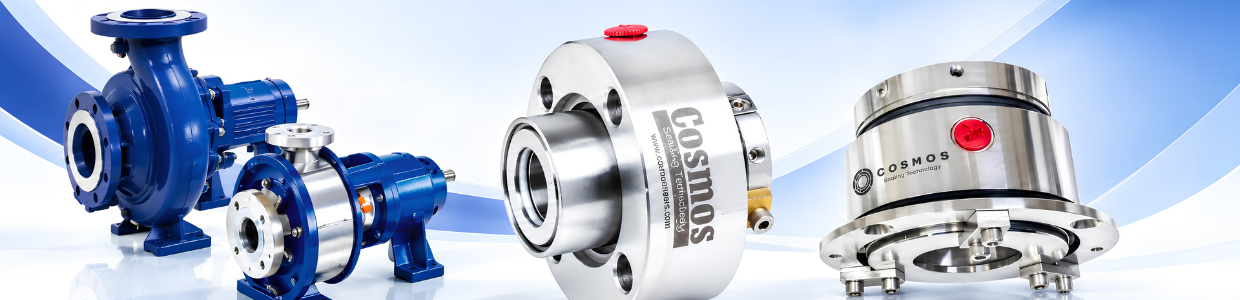
Not every pump requires the same sealing arrangement. Single mechanical seals use one set of primary sealing faces and are commonly suitable for general pumping applications. Double mechanical seals use two sets of faces to provide additional containment in more demanding applications.
Cartridge mechanical seals combine multiple sealing components into a preassembled unit, simplifying installation and reducing assembly-related errors. Component mechanical seals, supplied as individual parts, can provide flexibility for certain pump designs and maintenance requirements.
Specialized designs, including metal bellow mechanical seals and agitator mechanical seals, address particular equipment and operating needs. Understanding these differences helps engineers evaluate which industrial mechanical sealing solutions are appropriate rather than assuming one seal design suits every application.
5. What Affects Mechanical Seal Performance and Service Life?
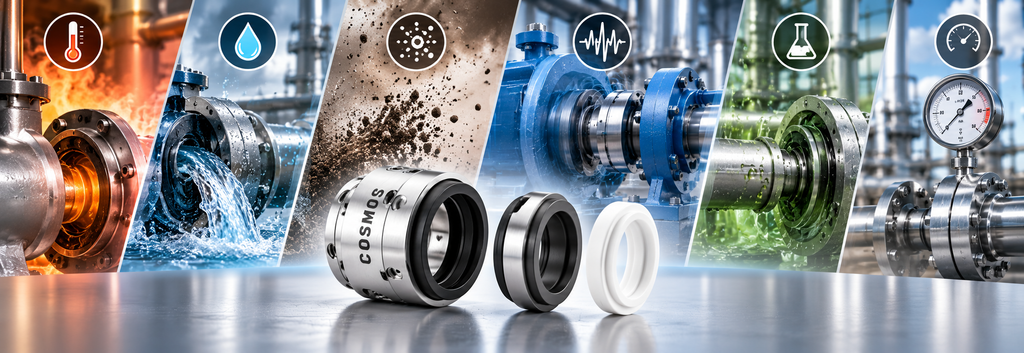
Even a correctly designed mechanical seal can experience premature failure when operating conditions are unsuitable. Common problems include dry running, excessive vibration, shaft misalignment, temperature fluctuations, and abrasive contamination. These conditions can damage sealing faces and reduce mechanical seal service life.
Proper lubrication and temperature management are particularly important. Depending on the application, seal support systems and flushing arrangements help maintain suitable conditions around the sealing faces, reducing the risk of overheating, contamination, and unstable operation.
Regular inspection and correct mechanical seal maintenance also contribute to equipment reliability. Monitoring leakage, vibration, and operating temperature helps maintenance teams identify developing problems early, potentially reducing unexpected pump downtime and costly repairs.
6. Turning Mechanical Seal Knowledge into Better Pump Selection
Understanding how seals function makes it easier to select equipment based on actual operating requirements. Engineers should consider fluid properties, pressure, temperature, shaft speed, pump configuration, and material compatibility before choosing a mechanical seal for industrial pumps.
For example, a pump handling clean water may have different sealing requirements from equipment transferring abrasive chemicals or hazardous liquids. Choosing between cartridge seals, component seals, and specialized designs requires evaluating the complete application rather than focusing only on the seal’s dimensions.
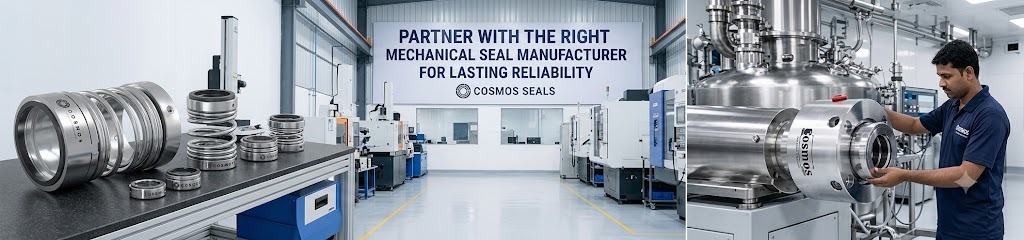
This is where technical guidance becomes valuable. Cosmos Seals offers cartridge mechanical seals, component seals, agitator seals, seal support systems, and pump spares for industrial applications. Understanding the available options helps businesses identify suitable products and make more confident sealing decisions.
Find the Right Mechanical Sealing Solution with Cosmos Seals
Understanding how mechanical seals work is the first step toward choosing reliable industrial pump sealing solutions. At Cosmos Seals, we believe informed decisions lead to better equipment performance. Whether you need cartridge seals, component seals, seal support systems, or pump spares, our team can help you understand suitable options based on your application, operating conditions, and maintenance requirements.
Q1. How does a mechanical seal work in an industrial pump?
A1. A mechanical seal uses rotating and stationary sealing faces to control fluid leakage around a pump shaft while allowing continuous rotation.
Q2. What are the main components of a mechanical seal?
A2. The main mechanical seal components include rotating and stationary seal faces, springs, O-rings, gaskets, and other retaining or mounting elements.
Q3. Why do mechanical seals need lubrication?
A3. Lubrication helps reduce friction and manage heat between sealing faces, preventing excessive wear and supporting reliable mechanical seal performance.
Q4. How do I know which mechanical seal is suitable for my pump?
A4. Consider the fluid, operating pressure, temperature, shaft speed, and pump design. A knowledgeable mechanical seal manufacturer can help evaluate the appropriate configuration.
Industrial pumps are essential for maintaining smooth operations across chemical processing, pharmaceuticals, oil and gas, water treatment, and manufacturing industries. However, selecting the wrong mechanical seal for industrial pumps can result in fluid leakage, equipment breakdowns, increased maintenance costs, and unexpected production downtime. Choosing the correct sealing solution is therefore essential for ensuring reliable pump […]
The Rising Importance of Mechanical Seals in India’s Industrial Sector India’s industrial sector continues to develop with increasing investments in manufacturing, infrastructure, chemical processing, pharmaceuticals, and energy production. As industries expand their operations, the demand for reliable equipment and efficient maintenance solutions is becoming increasingly important. Mechanical seals play a vital role in preventing fluid […]
Single Mechanical Seals: Working and Suitable Applications Single mechanical seals consist of one rotating seal face and one stationary seal face, lubricated by a thin film of process fluid. Their compact design makes them an economical and efficient choice for standard non-hazardous liquids, clean water circulation, light oils, and low-pressure systems. Due to their small […]
The Critical Role of Mechanical Seals in Oil and Gas Operations The oil and gas industry operates under some of the most demanding conditions, where equipment reliability and safety are extremely important. Pumps, compressors, and rotating machinery handle high pressure, extreme temperatures, and aggressive fluids, making mechanical seals an essential component for preventing leakage and […]
Introduction longer equipment life, and reduced maintenance costs in industrial applications. Whether used in pumps, mixers, compressors, or process equipment, the correct seal material and design directly influence the efficiency and reliability of rotating machinery. Selecting the wrong elastomer can lead to premature seal failure, costly downtime, and frequent replacements. Industries such as chemical processing, […]