Selecting the Right Mechanical Seal: Single vs Double Mechanical Seals for Industrial Pumps
October 9, 2026•6 min read
Single Mechanical Seals: Working and Suitable Applications
Single mechanical seals consist of one rotating seal face and one stationary seal face, lubricated by a thin film of process fluid. Their compact design makes them an economical and efficient choice for standard non-hazardous liquids, clean water circulation, light oils, and low-pressure systems. Due to their small footprint, they can generally be installed in standard pump stuffing boxes without major modifications.
The biggest advantages of single mechanical seals are their low initial cost and straightforward installation. Since they do not typically require an external barrier fluid reservoir or a complex support piping system, maintenance teams can manage and monitor them more easily. They provide reliable sealing performance for low-viscosity and non-crystallizing fluids.
Double Mechanical Seals: Maximum Safety for Demanding Environments
Double mechanical seals feature two independent sets of sealing faces, creating a chamber between them that contains a barrier or buffer fluid. This configuration helps minimize process fluid emissions and provides enhanced containment for hazardous, corrosive, polymerizing, and highly volatile fluids. When combined with suitable API piping plans, such as API Plan 52 (unpressurized) or API Plan 53 (pressurized), double seals offer additional protection for demanding industrial applications.
The primary benefit of this arrangement is that the inner seal contains the process fluid, while the outer seal provides an additional barrier against atmospheric leakage. If the primary seal faces wear or develop a leak, the barrier or buffer fluid helps contain the process fluid and reduces the risk of its release into the environment. Properly designed systems also provide continuous lubrication and heat removal for the seal faces under specified operating conditions.
Although double mechanical seals have higher initial costs and require additional support equipment, such as reservoir vessels, instrumentation, and monitoring systems, they can be a dependable long-term solution for critical pumps in chemical plants, refineries, and wastewater treatment facilities. Their use can help reduce maintenance costs, improve operational safety, and minimize the risk of environmental penalties.
Understanding Double Mechanical Seals for Demanding Applications
Double mechanical seals use two sets of seal faces with a chamber between them containing a buffer or barrier fluid. This arrangement provides an additional level of containment and is particularly useful in applications involving hazardous chemicals, volatile liquids, and demanding process conditions.
The inner seal helps contain the process fluid, while the outer seal provides an additional barrier against atmospheric leakage. Depending on the system design, the intermediate fluid helps lubricate the seal faces, remove heat, and reduce the risk of process fluid escaping.
Double mechanical seals are commonly considered for critical applications in chemical processing plants, refineries, and other industrial facilities where leakage control is a priority. Support systems such as API Plan 52 and API Plan 53 may be used, depending on the application and whether an unpressurized buffer fluid or a pressurized barrier fluid is required.
Although double mechanical seals generally involve higher initial costs and more complex support systems, they can offer significant benefits when improved containment and operational reliability are essential.
Key Differences Between Single and Double Mechanical Seals
Selecting between single and double mechanical seals requires evaluating the operating conditions and the consequences of seal failure.
Single mechanical seals are generally preferred for less hazardous applications because they offer a simpler design, lower initial cost, and easier installation. They are suitable for many standard pumping operations where limited leakage risk can be managed appropriately.
Double mechanical seals are often preferred when the pumped fluid presents significant safety, environmental, or containment concerns. Their additional sealing interface and fluid support system provide enhanced protection, although correct system design and maintenance remain essential.
Other important selection factors include operating pressure, temperature, fluid viscosity, chemical compatibility, shaft speed, and the presence of suspended solids. Consulting experienced mechanical seal suppliers helps ensure that the selected seal matches the actual operating requirements.
Factors to Consider When Selecting an Industrial Mechanical Seal
Choosing the right industrial mechanical seal involves more than comparing the initial purchase price. Engineers should evaluate the following factors before making a decision.
Process fluid: Determine whether the fluid is hazardous, corrosive, abrasive, volatile, or prone to crystallization.
Operating pressure and temperature: Ensure the seal and its supporting system are suitable for the equipment’s operating and transient conditions.
Leakage requirements: Consider workplace safety, environmental regulations, and the consequences of process fluid release.
Seal face materials: Materials such as silicon carbide, tungsten carbide, and carbon should be selected according to fluid compatibility, wear resistance, and operating conditions.
Installation and maintenance: Assess the available installation space, support system requirements, monitoring needs, and maintenance capabilities.
Total operating cost: Consider installation, maintenance, energy consumption, downtime, and potential leakage-related costs alongside the initial price.
How the Right Mechanical Seal Improves Pump Performance
A properly selected pump mechanical seal helps control leakage, reduce friction, and protect surrounding equipment from process fluid exposure. When correctly installed and operated within its design limits, it can contribute to improved pump reliability and longer service intervals.
For applications involving hazardous or difficult-to-seal fluids, an appropriately engineered double seal system may provide additional containment and reduce the consequences of primary seal failure. For less demanding applications, a suitable single seal may provide reliable performance without the added complexity of a dual-seal support system.
Working with established mechanical seal manufacturers enables industries to evaluate suitable seal designs, material combinations, and support arrangements for their specific applications.
Choose Reliable Mechanical Sealing Solutions for Your Industrial Pumps
Selecting the right single or double mechanical seal can improve pump reliability, enhance operational safety, and help control long-term maintenance costs. At Cosmos Seals, we offer single, double, and customized cartridge mechanical seal solutions for a range of industrial applications.
Our team can help you identify a suitable sealing solution based on your equipment specifications, process fluid, and operating conditions.
Contact Cosmos Seals today to discuss your pump sealing requirements and explore suitable solutions for reliable industrial operations.
Q1. What is the main difference between single and double mechanical seals?
A single mechanical seal has one pair of sealing faces, while a double mechanical seal has two sets of sealing faces with a buffer or barrier fluid between them. Double seals provide an additional level of containment for demanding applications.
Q2. What is the recommended barrier fluid pressure for a double mechanical seal?
A2. In pressurized arrangements such as API Plan 53, barrier fluid pressure is generally maintained above the seal chamber pressure. The exact differential should follow the seal manufacturer’s specifications and the system design.
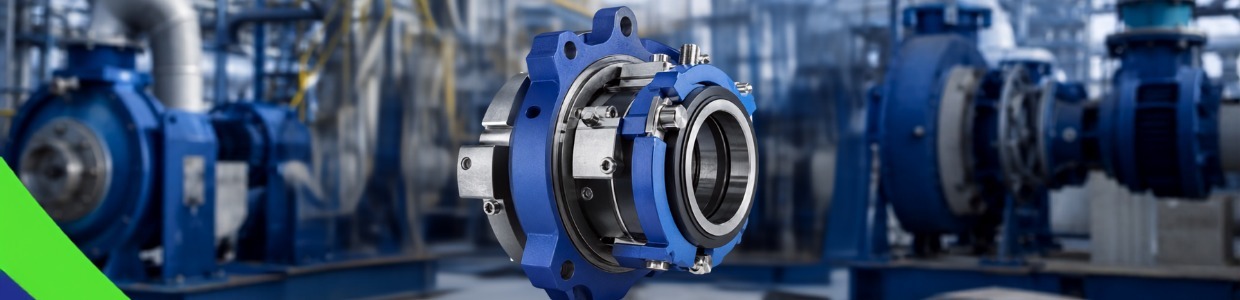
Q3. Can a single mechanical seal be replaced with a double cartridge mechanical seal?
A3. Yes, in suitable applications. The pump’s seal chamber dimensions, shaft arrangement, installation space, and operating conditions must be checked before selecting a compatible double cartridge seal.
The Critical Role of Mechanical Seals in Oil and Gas Operations The oil and gas industry operates under some of the most demanding conditions, where equipment reliability and safety are extremely important. Pumps, compressors, and rotating machinery handle high pressure, extreme temperatures, and aggressive fluids, making mechanical seals an essential component for preventing leakage and […]
Introduction longer equipment life, and reduced maintenance costs in industrial applications. Whether used in pumps, mixers, compressors, or process equipment, the correct seal material and design directly influence the efficiency and reliability of rotating machinery. Selecting the wrong elastomer can lead to premature seal failure, costly downtime, and frequent replacements. Industries such as chemical processing, […]
Introduction In today’s fast-paced industrial environment, machinery is expected to deliver consistent performance with minimal downtime. One of the most important yet often overlooked components that contribute to this reliability is the Low Friction Mechanical Seal. These advanced sealing solutions reduce wear, minimize energy consumption, and improve equipment efficiency across a wide range of industries. […]
In modern industries, maintaining the efficiency and reliability of rotating equipment is essential for smooth operations. Cartridge mechanical seals have become a preferred sealing solution across various sectors due to their easy installation, improved performance, and ability to handle challenging operating conditions. These advanced seals help prevent leakage, reduce maintenance requirements, and enhance the overall […]
High-temperature industrial applications demand sealing solutions that can withstand extreme heat, pressure, and challenging operating conditions without compromising performance. Whether in chemical processing, power generation, oil & gas, pharmaceuticals, or manufacturing plants, selecting the right high-temperature mechanical seals is crucial for maintaining equipment reliability and preventing costly downtime. A poorly selected seal can lead to […]